

Paper money has long been a cornerstone of the American economy. Yet, its journey from a novel experiment to a trusted circulated currency reflects centuries of political, technological, and economic evolution. Learn more about the origin of paper money in the United States, from its colonial roots to the foundation of modern United States currency notes.
Early American Currency and the Colonial Era
Before the formation of the United States, colonial governments relied on a combination of foreign coins, bartering, and credit to conduct transactions. In 1690, the Massachusetts Bay Colony became the first to issue paper currency in North America, introducing notes to fund military expeditions. This marked the U.S. paper money origin, though these early notes were often met with skepticism and lacked consistent value.
Throughout the 1700s, other colonies followed suit, printing paper money known as “bills of credit.” Governments backed these notes with future tax revenues or land assets, but they remained vulnerable to inflation and counterfeiting. Despite their instability, they laid the groundwork for government-backed paper money.
Revolutionary Currency: The Continental Dollar
During the American Revolution, the Continental Congress issued its own paper currency: the Continental Dollar. Introduced in 1775, this early attempt at a unified American currency helped finance the war effort. However, excessive printing and a lack of backing in gold or silver quickly led to hyperinflation, reducing its value to near nothing. This failure led to the widespread saying, “Not worth a Continental.”
The Continental Dollar’s collapse reinforced the need for a stronger, more centralized monetary system—a lesson that would influence United States currency notes for decades.
The Birth of United States Currency Notes
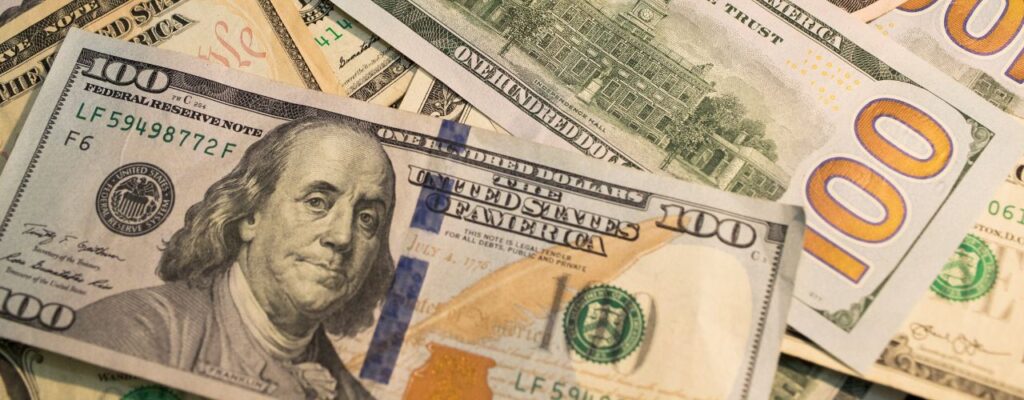
The official origin of paper money issued by the federal government came during the Civil War. Congress authorized the printing of non-interest-bearing Demand Notes to raise funds for the Union war effort. These green-tinted bills were nicknamed “greenbacks” and represented the first widely circulated United States currency notes. In 1862, they were replaced by Legal Tender Notes, which were declared acceptable for most public and private debts. Over time, the designs were standardized, and the Bureau of Engraving and Printing assumed responsibility for producing currency.
What Is the Oldest Dollar Bill?
The oldest dollar bill issued by the U.S. government is the $1 Legal Tender Note from 1862. This note featured a portrait of Salmon P. Chase, the Secretary of the Treasury under President Abraham Lincoln. Collectors prize these early notes for their rarity and historical significance. Some feature ornate engravings, unique red or blue seals, and signatures that reflect the political figures of their time.
The Evolution of Paper Money in the 20th Century
As the U.S. economy grew, so did the complexity and security of its paper money. The Federal Reserve System was established in 1913, and by 1914, the first Federal Reserve Notes were issued. These notes gradually replaced earlier forms like Gold and Silver Certificates, which promised to pay holders in precious metals.
In 1929, all paper money was resized to a uniform smaller format, and standardized designs were introduced. By the mid-20th century, most U.S. currency had moved away from commodity backing, making Federal Reserve Notes fiat currency (valued by government decree rather than physical assets).
Collecting Historic U.S. Currency Notes
From early Legal Tender Notes and Silver Certificates to rare error bills and discontinued denominations, paper money is essential to many numismatic collections. These notes’ historical importance, artwork, and scarcity make them highly sought after. Collectors interested in the oldest dollar bill examples often pursue Civil War-era greenbacks, Gold Certificates from the 19th century, or the first $1 Federal Reserve Notes issued in the early 20th century.
Shop Historical Paper Money at Pinehurst Coins
Pinehurst Coins offers a wide selection of historic U.S. currency notes and coins, including rare and vintage items ideal for collectors at every level. Explore the oldest dollar bills and collectible pieces at Pinehurst Coins.