

Two of the most commonly confused terms in numismatics are “Proof” and “Mint State.” Both refer to coins that have never entered circulation, and both can appear strikingly beautiful — yet they are fundamentally different products, made through distinct processes and intended for different audiences. Whether you’re just beginning your collecting journey or brushing up on the basics, understanding this distinction is essential to building a well-informed collection.
What Is a Mint State Coin?
A Mint State coin is a business strike coin, meaning it was produced for general circulation, that has never actually circulated. These coins are made using the standard production process at a government mint, where coin dies strike blank planchets at high speed to produce large quantities efficiently.
What defines a Mint State coin is its condition, not its method of production. To qualify, a coin must exhibit no wear, although it may still have minor imperfections from the minting process or handling. The Sheldon grading scale assigns Mint State coins a numeric grade from MS-60 to MS-70, with MS-70 representing a theoretically perfect coin with no post-production imperfections visible under magnification.
Mint State coins are graded on factors including:
- Strike: How fully the design was impressed into the metal
- Luster: The original mint sheen remaining on the coin’s surface
- Contact marks: Small nicks or abrasions from contact with other coins during production or storage
- Eye appeal: The overall visual impression of the coin
Even coins that never touched a cash register or a pocket can show contact marks from being struck and tumbled together with thousands of others in mint bins, which is why MS-70 examples are rare and highly prized.
What Is a Proof Coin?
A Proof coin is a specially produced collector coin made using a more detailed and labor-intensive minting process. Proof coins are not intended for circulation; they are created specifically for collectors seeking high-quality, visually striking examples of a design.
The process begins with specially prepared dies that are polished to a mirror finish, while blank planchets are carefully burnished. Each coin is struck multiple times at slower speeds and higher pressure to achieve exceptional detail and sharp relief. The result is a coin with mirror-like fields that contrast with frosted design elements—often referred to as “cameo” contrast.
Proof coins are graded on the PR or PF scale, ranging from PR-60 to PR-70. The highest-quality examples may receive a Deep Cameo (DCAM) designation, indicating strong contrast between mirrored fields and frosted devices.
Proof vs. Mint State: Key Differences at a Glance
While both coin types typically show no signs of circulation, several important distinctions set them apart:
Production Process: Business strikes are produced quickly and in bulk for general use. Proof coins are made deliberately and carefully, with each piece handled individually during production.
Appearance: Mint State coins display a cartwheel luster — a flowing, reflective sheen created by the die finishing process. Proof coins feature deep mirror fields with frosted raised designs, giving them a two-tone, high-contrast look that is instantly recognizable.
Mintage: Government mints produce business strike coins by the millions. Proof mintages are intentionally limited, often sold directly to collectors through subscription programs or special mint sets.
Grading Scale: Mint State coins use the MS scale (MS-60 to MS-70), while Proof coins use the PR or PF scale (PR-60 to PR-70). The designation “CAMEO” or “DEEP CAMEO” on a Proof indicates the degree of contrast between the fields and devices.
Price: Proof coins often command higher premiums due to their specialized production, limited mintages, and collector demand, though exceptions can occur depending on rarity and market conditions.
Purpose: Mint State coins are standard-issue coins that have not experienced wear, while Proof coins are produced specifically for collectors.
Proof-Like and Special Mint Set Coins
Adding some nuance to the Proof vs. Mint State conversation are two additional designations worth knowing: Proof-Like (PL) and Special Mint Set (SMS) coins.
Proof-Like (PL): These are business strikes that exhibit mirror-like fields due to early die use, giving them some visual characteristics of Proof coins. They were not made as Proofs, but their appearance can be highly appealing to collectors. While the Canadian Royal Mint is especially noted for PL coins, other mints have produced them as well.
Special Mint Set (SMS): Produced by the U.S. Mint primarily from 1965 to 1967, SMS coins occupy a middle ground. They were struck with more care than standard business strikes but not to full Proof standards. Collectors and graders distinguish these coins from both Mint State and Proof issues.
Why It Matters for Collectors
Understanding the difference between Proof and Mint State coins directly affects how you evaluate, buy, and sell pieces in your collection. Misidentifying a coin’s type can lead to overpaying, undervaluing a piece, or making inaccurate comparisons when researching prices.
When browsing rare coins or silver offerings, pay attention to the grade prefix — MS vs. PR — and any additional designations like CAMEO or DCAM. These details make a meaningful difference in a coin’s rarity and value.
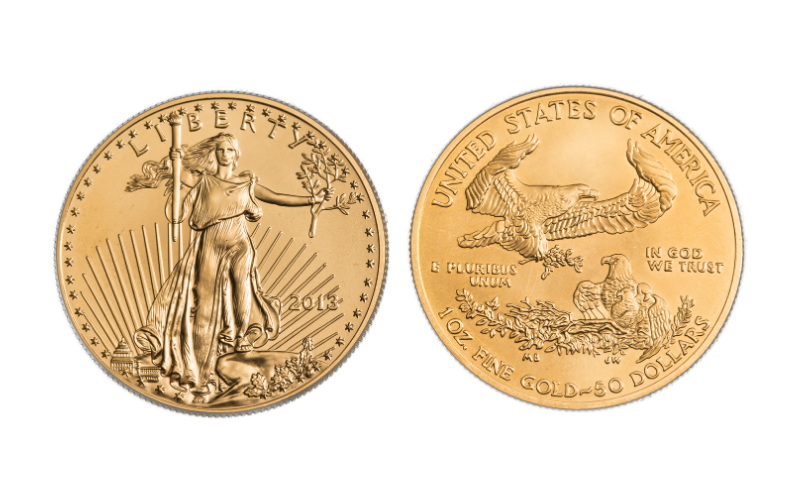
Whether you’re drawn to the classic luster of a high-grade Mint State Morgan Dollar or the stunning mirror finish of a modern Proof American Eagle, knowing what you’re looking at gives you a real advantage as a collector.