

Most collectors value coins for their history, beauty, and rarity. However, sometimes the most fascinating pieces are those that were never intended to leave the U.S. Mint in the first place. Mis-Struck coins (better known as mint errors or error coins) offer a glimpse into the complex process of coin production and the occasional mistakes that can make certain coins highly collectible.
In this article, we’ll explore what happens when a coin is mis-struck, the types of mint errors you might encounter, and why these misprinted coins can hold such strong appeal in the numismatic world.
How Coins Are Normally Made?
To understand coin errors, it helps to know how a standard coin is struck. At the U.S. Mint, blank pieces of metal called planchets are fed into presses where hardened dies strike the designs into the obverse and reverse sides. When everything runs smoothly, the result is a uniform, accurate coin ready for circulation.
But coin presses handle thousands of strikes per hour, and even with quality controls in place, mistakes sometimes occur. These mint errors can create unusual and unexpected results, such as misalignments, off-center strikes, or coins with missing elements.
What Is a Mis-Struck Coin?
Mis-Struck coins are coins that have been incorrectly struck during the minting process. Unlike post-mint damage (such as scratches or bends from circulation), a misstrike originates inside the Mint itself. That distinction is key: only errors made during production qualify as true mint errors.
Because they represent rare deviations from normal minting standards, misprinted coins are highly sought after by collectors. Some error coins are subtle and inexpensive, while others are dramatic, rare pieces that can command high premiums on the market.
Coin errors can have various causes. Here are some of the most notable categories of mint errors:
1. Off-Center Strikes
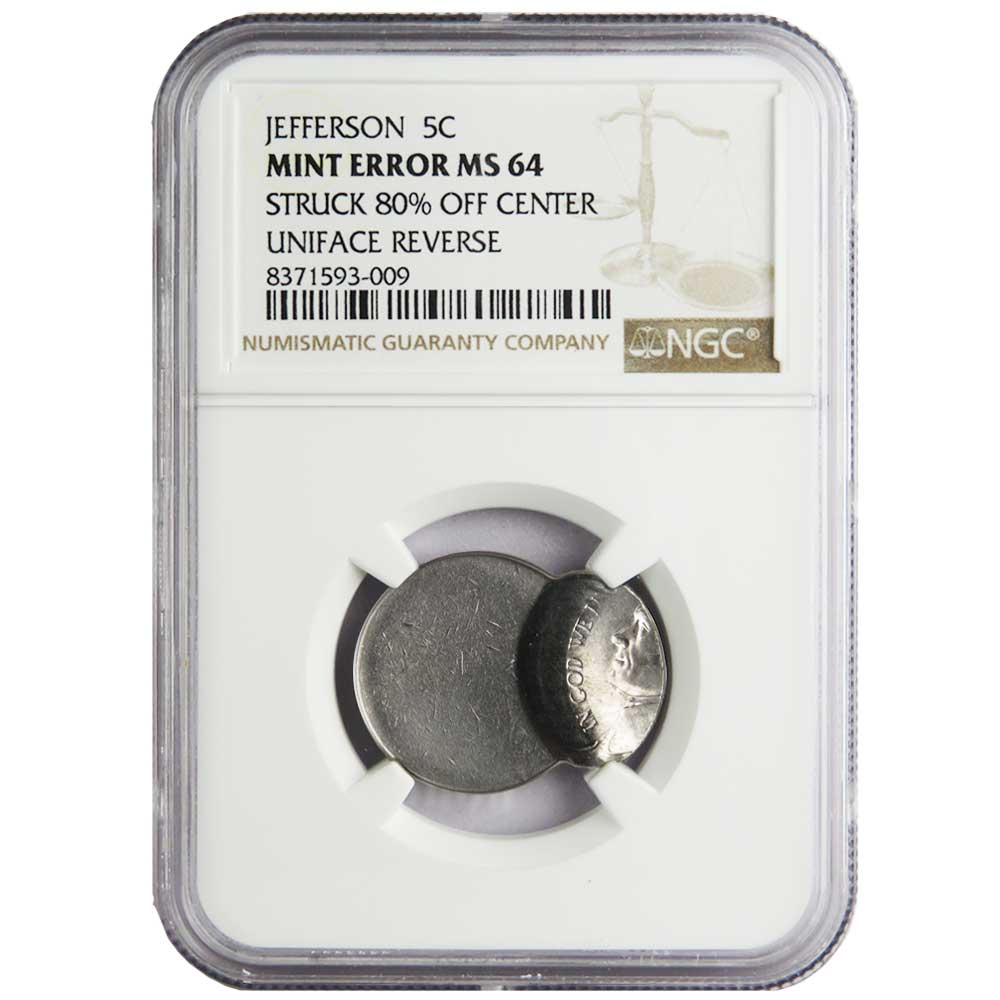
One of the most common error types, off-center strikes occur when a planchet is not properly centered in the press. The resulting coin displays only part of the design, with the rest of the surface blank. The degree of off-center striking often determines collectability—the more dramatic the error, the more desirable the coin.
2. Double Strikes
Sometimes a coin is struck more than once by the dies. When the strikes do not align perfectly, you’ll see a “ghosted” or overlapping image. Double strikes are popular among collectors because they provide a clear visual example of the minting process gone wrong.
3. Broadstrikes
A broadstrike error happens when the coin is struck without the restraining collar that normally shapes its edge. The result is a coin that appears wider and flatter than usual, often lacking reeded or raised edges.
4. Die Errors
Coins are struck using steel dies engraved with the coin’s design. If the die itself contains a flaw—such as a crack, chip, or misengraving—the error will be transferred to every coin struck with that die. Die cracks, cuds, and misengraved details all fall into this category.
5. Missing or Clipped Planchets
Planchets themselves are sometimes defective. A clipped planchet may have a crescent-shaped cut missing from the edge, while other planchets may be underweight, incomplete, or even struck on the wrong metal. These mistakes produce error coins that stand out immediately from regular issues.
Why Collectors Value Error Coins?
Common sense suggests that misprinted coins would be dismissed as rejects. Yet for many collectors, these mistakes are a rare and intriguing addition to a collection.
The appeal of error coins often comes from three main factors:
- Rarity – Only a small percentage of coins leave the Mint with visible errors, making them scarce by nature.
- Uniqueness – No two mis-struck coins are exactly alike. Each tells a story of mechanical imperfection in an otherwise precise process.
- Educational Value – Mint errors are tangible evidence of how coins are made and how things can occasionally go wrong at any step of the process.
Error coins often spark bidding wars among enthusiasts due to low supply and high demand. Some extreme examples of mis-struck coins have even sold for thousands of dollars at auction.
Misprinted Coins vs. Damaged Coins
It’s critical to distinguish between misprinted coins (a common term for mint errors) and coins that are simply damaged after leaving the Mint. Scratches, bends, environmental corrosion, or deliberate alterations are considered post-mint damage and generally do not add collectible value.
Authentic mint errors, on the other hand, carry legitimacy because they originated during the official production process. Collectors should seek certification from professional grading services to confirm whether a coin’s flaw is truly a mint error.
Building an Error Coin Collection with Pinehurst Coins
For collectors interested in error coins, there are a few ways to start building a collection:
- Search your change – While extremely rare, mis-struck coins occasionally surface in everyday circulation.
- Buy certified error coins – Reputable dealers and auction houses often carry authenticated mint errors.
- Learn the types – Familiarize yourself with common categories like off-center strikes and die cracks so you can spot them more easily.
Pinehurst Coins offers a wide selection of coins, bullion, and collectibles to suit every numismatic interest. Explore our error coin inventory today and discover the thrill of adding both traditional and unique coins to your collection.