

The difference between burnished, proof, and bullion American Eagles comes down to three things: how they’re made, how they look, and who they’re made for. Burnished Eagles use specially prepared blanks and carry a “W” mintmark from West Point. Proof Eagles feature mirror-like fields with frosted designs, struck multiple times on polished dies. Bullion Eagles are standard investment-grade coins produced for the mass market at the lowest premium over spot price.
That sounds simple enough. But once you start shopping, the lines blur fast. A burnished Silver Eagle and a bullion Silver Eagle contain the same amount of .999 fine silver. They share the same iconic Adolph Weinman Walking Liberty obverse. Yet one might sell for two or three times the price of the other. Why?
The answer sits at the intersection of minting technique, collector demand, and limited production. Whether you’re building a precious metals portfolio or assembling a date-run collection of American Silver Eagles, knowing these distinctions matters. It’s the difference between paying a small premium over spot and pursuing coins with stronger numismatic potential.
What’s a Bullion Eagle?
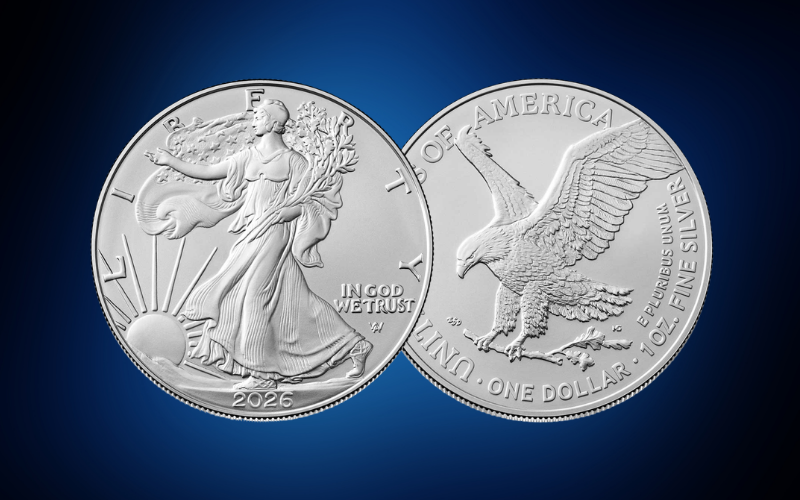
Bullion Eagles are the workhorses of the American Eagle program. The U.S. Mint produces them in gold, silver, platinum, and palladium. They’re designed primarily as a convenient, government-backed way for you to own precious metals.
Here’s what defines a bullion Eagle:
- Standard production process. Workers feed blanks into high-speed coining presses and strike them once. No specialized finishing like polishing or burnishing of planchets or dies.
- No mintmark (typically). Most bullion Eagles don’t carry a mintmark, though production occurs at facilities like West Point and Philadelphia. You can learn more about where coins are made in our overview of U.S. Mint facilities.
- Lowest premiums. Because they’re mass-produced, bullion Eagles trade closest to the current spot price of their metal content.
- Sold through authorized distributors. The Mint doesn’t sell bullion Eagles directly to the public. They move through a network of authorized purchasers who then distribute to dealers like us.
Bullion Eagles are the go-to choice if you’re focused on accumulating physical metal. You’re paying for the gold, silver, platinum, or palladium content, plus a modest premium for fabrication and distribution. The coin’s legal tender status and government guarantee of weight and purity make it one of the most liquid forms of physical precious metals available.
If your goal is as straightforward as stacking metal, hedging against inflation, and keeping premiums low, bullion Eagles are your best friend. Wondering if silver belongs in your portfolio? We break that down in our piece on whether silver is a good investment.
What’s a Proof Eagle?
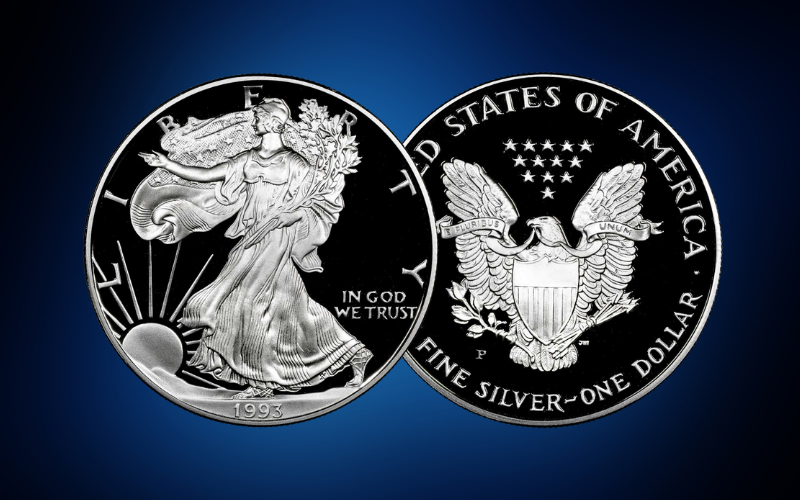
Proof Eagles are the showpieces of the American Eagle program. They’re produced using a specialized minting process with roots going back centuries , and they carry premiums well above bullion because of their superior finish and limited production.
The proof minting process involves several extra steps:
- Specially polished dies. Workers treat the coin dies to create mirror-like fields. The flat background areas of the coin.
- Frosted devices. The raised design elements, like the Walking Liberty figure or the heraldic eagle, receive a frosted, matte texture. This contrasts sharply with the reflective fields, creating what collectors call a “cameo” or “deep cameo” effect.
- Multiple strikes. Workers strike each coin two or more times at lower press speeds. This forces metal into every fine detail of the design, producing razor-sharp definition you won’t find on a bullion coin.
- Hand-loaded and inspected. Mint workers handle proof coins individually, wearing gloves, and inspect each one for quality before packaging.
- “W” mintmark. Most modern Proof Eagles are struck at West Point and carry a ‘W’ mintmark, though other mint facilities have been used in certain years.
The U.S. Mint sells proof Eagles directly to collectors, typically in original government packaging with a certificate of authenticity. Mintages are substantially lower than bullion issues. That scarcity matters. Proof Eagles from certain years, especially low-mintage dates or coins with First Strike designations, can appreciate well beyond their metal content. A proof Eagle graded PF70 Ultra Cameo by NGC or PCGS can command a serious premium from collectors chasing perfection.
What’s a Burnished Eagle?
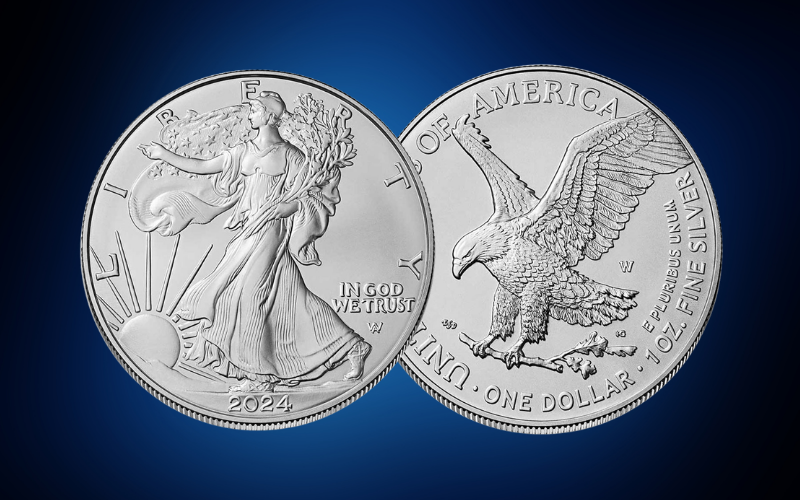
Burnished Eagles sit between bullion and proof in both production technique and price. The Mint officially calls them “Uncirculated” Eagles (with a capital U), but collectors and dealers widely use the term “burnished” to describe the process that makes them distinct.
Here’s the key difference. Before striking, planchets are burnished before striking in a tumbling process that creates a smooth, satin-like surface that’s noticeably different from a standard bullion blank.
Other characteristics of burnished Eagles include:
- “W” mintmark. Like proofs, burnished Eagles are struck at West Point and carry the “W” mintmark, making them identifiable at a glance.
- Single strike on burnished blanks. Unlike proofs, they’re struck only once. But because workers individually prepare each blank, the finished coin has a more uniform, satin finish than bullion strikes
- Lower mintages than bullion. Burnished Silver Eagle mintages often range from 200,000 to 800,000 per year. A fraction of the bullion production run.
- Sold directly to the public. The Mint sells burnished Eagles on its website, packaged in a presentation case with a certificate of authenticity.
The satin finish on a burnished Eagle is its calling card. Hold one next to a standard bullion Eagle, and you’ll see the difference immediately. The burnished coin has a soft, even glow across its entire surface, while the bullion coin is brighter but less uniform luster.
If you’re building a complete American Eagle set, burnished issues are essential. If you’re an investor, they offer a useful middle ground: more collectible than bullion, less expensive than proof, and still backed by the full weight and purity guarantee of the U.S. Mint.
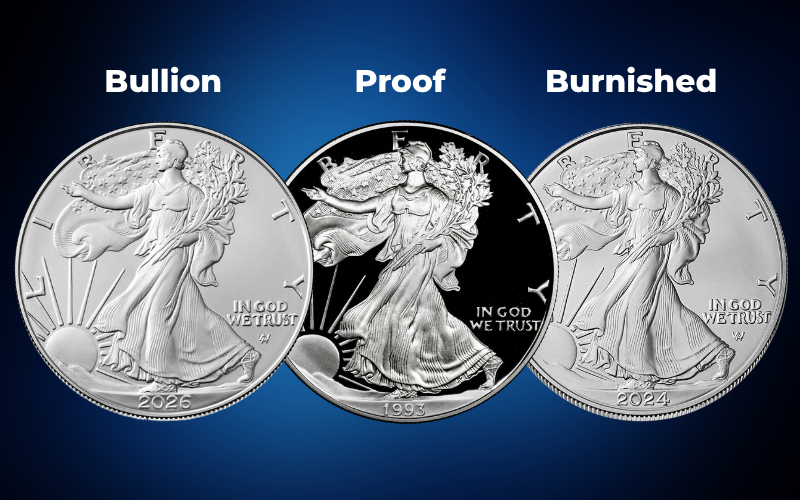
Burnished vs. Proof vs. Bullion: A Side-by-Side Comparison
Sometimes the clearest way to see the differences is in a direct comparison. Here’s how the three finishes stack up across the factors that matter most to you:
Bullion
- Surface Finish: Standard brilliant (business strike) finish
- Strike Count: Single
- Mintmark: None (typically)
- Annual Mintage: Millions
- Premium Over Spot: Lowest
- Sold By: Authorized Distributors
- Packaging: Bulk Tubes or Monster Boxes
- Primary Buyer: Investors (primarily)
Burnished
- Surface Finish: Smooth, Even Satin Luster
- Strike Count: Single (on prepared blanks)
- Mintmark: “W” (West Point)
- Annual Mintage: Hundreds of Thousands
- Premium Over Spot: Moderate
- Sold By: U.S. Mint Direct
- Packaging: OGP with certificate
- Primary Buyer: Collectors/Investors
Proof
- Surface Finish: Mirror Fields, Frosted Devices
- Strike Count: Multiple
- Mintmark: “W” (West Point, most modern issues; other mintmarks used in some years)
- Annual Mintage: Hundreds of Thousands or Fewer
- Premium Over Spot: Highest
- Sold By: U.S. Mint Direct
- Packaging: OGP with certificate
- Primary Buyer: Collectors
One thing worth remembering: all three versions contain the exact same amount of precious metal. A 2024 bullion Silver Eagle, a 2024 burnished Silver Eagle, and a 2024 proof Silver Eagle each hold one troy ounce of .999 fine silver. The price difference comes from the minting process, scarcity, and collector demand.
Many common coin myths stem from confusion about these finishes. The metal value is identical. The numismatic value is where things diverge.
Which Type of Eagle Is Right for You?
Your answer depends on your goals. If you’re a pure metals investor, bullion Eagles make the most sense. Among American Eagle options, bullion typically offers the most metal for the price, and is recognized and liquid worldwide. When you’re ready to sell, the spread between buy and sell prices is typically tighter on bullion than on collector finishes.
If you’re a collector building a date-run set, you’ll want burnished and proof Eagles alongside the bullion issues. The “W” mintmark on most modern burnished and proof coins makes them distinct entries in any collection, and third-party grading from NGC or PCGS can enhance marketability and, in some cases, value—especially for top-graded examples or key issues. Understanding coin errors and varieties can further sharpen your eye for coins with extra numismatic potential.
If you’re somewhere in between, consider a mixed approach. Stack bullion for your metals position and pick up select proof or burnished issues from key years. Low-mintage dates, anniversary editions, and coins with First Strike or Early Release labels from NGC or PCGS may carry additional premiums among certain collectors.
The American Eagle program has been running since 1986, giving you nearly four decades of dates, mintmarks, and finishes to pursue. That depth is part of what makes the Eagles so popular, and it connects to a long tradition of American coinage stretching back to the earliest days of the republic.
Why Buy Your Eagles From Us
We’ve been serving collectors and enthusiasts since 2004. As one of the nation’s largest distributors of modern certified coins and an authorized NGC and PCGS dealer, we handle burnished, proof, and bullion Eagles every single day.
FAQs
Are burnished Eagles worth more than bullion Eagles?
Yes, burnished Eagles typically carry a higher premium than their bullion counterparts. Lower mintages and the specialized preparation of their blanks drive that difference. Burnished Silver Eagles often trade at higher premiums than bullion versions, with differences that vary depending on year, condition, and market demand. Coins graded MS70 by NGC or PCGS may command additional premiums among collectors.
Can you tell the difference between a bullion and a burnished Eagle by looking at it?
You can, once you know what to look for. The burnished Eagle has a smooth, even satin luster across its entire surface, while bullion Eagles have a brighter, more traditional, brilliant finish. The most recognizable feature of the modern burnished coin is the “W” mintmark, located on the obverse below “In God We Trust” on the classic design. If you’re unsure, a quick side-by-side comparison makes the difference immediately clear.
Do proof Eagles contain more precious metal than bullion Eagles?
No. Proof, burnished, and bullion American Eagles of the same denomination contain the same amount of precious metal. A proof American Silver Eagle contains one troy ounce of .999 fine silver, just like its bullion counterpart. The higher price reflects the specialized minting process, limited production, and collector demand—not additional metal content.
Where does the gold in American Gold Eagles actually come from?
American Gold Eagles are struck from gold sourced within the United States, as required by law under the Gold Bullion Coin Act of 1985. The blanks are composed of 91.67% gold, 3% silver, and 5.33% copper, giving each coin a 22-karat composition that’s more durable than pure gold coins. If you’re curious about the broader story of gold sourcing and mining, check out our article on where gold comes from.