

The difference between Type 1 and Type 2 American Eagles comes down to a major design overhaul. In 2021, the U.S. Mint introduced a redesigned reverse for both the American Silver Eagle and American Gold Eagle. That marked the first design change to these iconic coins in over 35 years. That single year of overlap created two distinct versions that collectors and investors now track separately.
If you’ve been buying bullion or building a graded coin collection, this distinction matters more than you might think. Type 1 and Type 2 Eagles carry different premiums, different grading populations, and different long-term collectibility profiles.
This guide breaks down exactly what changed, why it changed, and how each type compares for both investors and numismatists.
What Are Type 1 American Eagles?
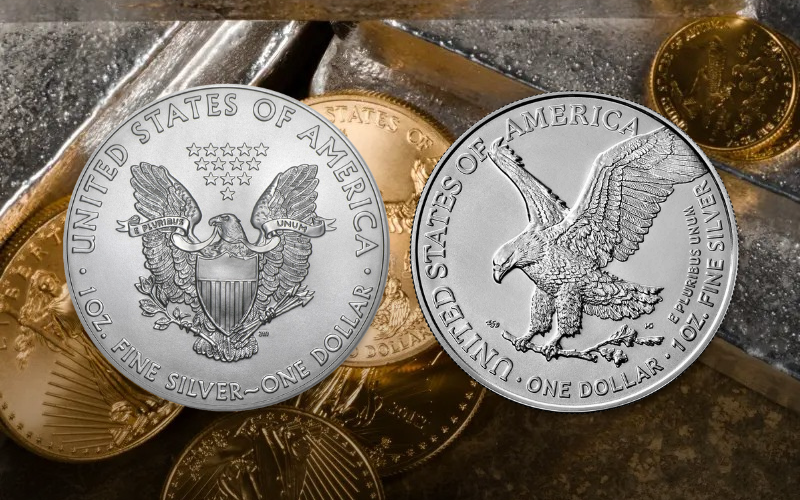
Type 1 refers to the original design of the American Eagle series. For Silver Eagles, Type 1 features John Mercanti’s Heraldic Eagle reverse, first struck in 1986. For Gold Eagles, Type 1 carries Miley Busiek’s family of eagles reverse, which also debuted in 1986.
These designs ran for 35 consecutive years. A remarkably long production life for any coin series. During that stretch, the American Silver Eagle became the world’s best-selling silver bullion coin. The U.S. Mint produced over 600 million ounces across that period, according to their annual reports. The Gold Eagle followed a similar path as one of the most recognized gold bullion coins globally.
Here are the key features of the Type 1 design you should know:
- Silver Eagle Reverse (Type 1): Heraldic Eagle with shield, designed by John Mercanti, the U.S. Mint’s 12th Chief Engraver
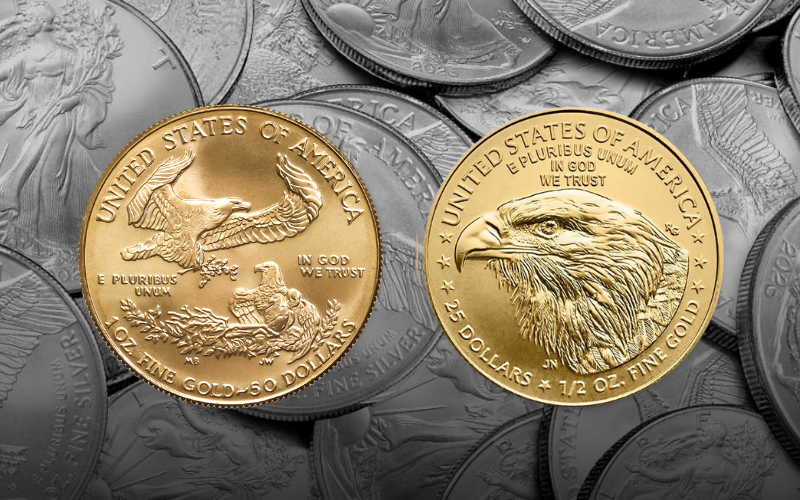
- Gold Eagle Reverse (Type 1): Family of eagles. A male carrying an olive branch over a nest with a female and hatchlings. Designed by sculptor Miley Busiek
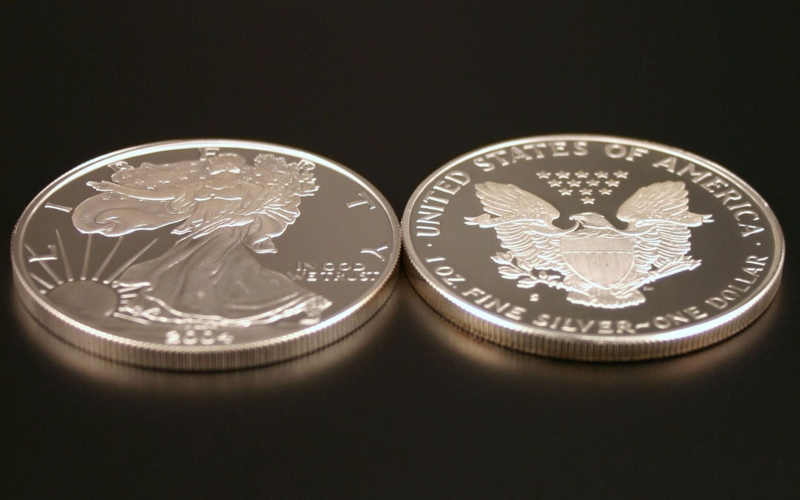
- Obverse (Silver): Adolph Weinman’s Walking Liberty, carried over from the 1916-1947 half dollar
- Obverse (Gold): Augustus Saint-Gaudens’ Lady Liberty, adapted from the famous 1907 double eagle
- Edge (Gold): Reeded edge on both types, though anti-counterfeiting features differed between them
The obverse designs didn’t change between Type 1 and Type 2 for the Gold Eagle. The Silver Eagle’s obverse, however, received subtle modifications with the Type 2 transition. We’ll cover those details below.
What Changed with the Type 2 Design?
In mid-2021, the U.S. Mint introduced the Type 2 redesign for both the American Silver and Gold Eagle series. These updates went beyond aesthetics, incorporating enhanced security features and refreshed artistic details.
For the American Silver Eagle, designer Emily Damstra created a new reverse depicting a bald eagle landing while carrying an oak branch. The obverse retains Adolph A. Weinman’s Walking Liberty design, with subtle refinements that more closely reflect the original artwork.
The Mint also introduced an enhanced anti-counterfeiting feature—a variation in the coin’s reeded edge—to help deter counterfeiting.
For the American Gold Eagle, Jennie Norris designed a new reverse featuring a close-up portrait of an eagle. The obverse continues Augustus Saint-Gaudens’ Liberty design, with minor updates to detail and finish.
Here’s a side-by-side breakdown to make your comparison easier:
Silver Eagle Comparison:
- Type 1 Reverse: Heraldic Eagle with shield (John Mercanti)
- Type 2 Reverse: Landing eagle with oak branch (Emily Damstra)
- Security: Type 2 includes enhanced edge security features
Gold Eagle Comparison:
- Type 1 Reverse: Family of eagles (Miley Busiek)
- Type 2 Reverse: Eagle portrait (Jennie Norris)
- New Feature: Type 2 includes explicit weight and fineness inscriptions (e.g., “1 OZ. FINE GOLD” and “AU”)
During the 2021 transition year, both Type 1 and Type 2 coins were produced across multiple U.S. Mint facilities, creating a unique crossover year for collectors.
Why Does the 2021 Crossover Year Matter So Much?
2021 is the only year both Type 1 and Type 2 American Eagles were produced, making it a unique transitional year for collectors.
The U.S. Mint split its 2021 production between two designs. According to U.S. Mint mintage data, the 2021 Type 1 Silver Eagle had a bullion mintage of approximately 28.3 million, while the 2021 Type 2 came in around 16.2 million. That lower Type 2 mintage for the debut year is meaningful when you’re thinking about long-term collectibility.
For graded coins, the 2021 crossover year gets even more interesting. NGC and PCGS both created distinct designations for Type 1 and Type 2 coins. A 2021 Silver Eagle graded MS70 First Strike in the Type 2 design can command a noticeably different premium than its Type 1 counterpart.
We offer both Type 1 and Type 2 examples in raw and certified formats, and understanding these distinctions can help you make a more informed buying decision.
Type 1 vs. Type 2 American Eagles: Which Is Better for Investors?
The right choice depends on your goals. If you’re buying silver or gold purely for bullion investment, the metal content is identical. A Type 1 Silver Eagle contains the same one troy ounce of .999 fine silver as a Type 2. A Type 1 Gold Eagle holds the same gold content. 91.67% gold, alloyed with silver and copper for durability as a Type 2. But premiums aren’t the same across every coin.
Type 1 Silver Eagles from common years like 2016, 2017, and 2018 typically trade at standard bullion premiums. Type 2 coins from 2022 onward carry similar bullion premiums. The 2021 transition year, however, often carries a slight markup due to collector demand.
If you’re focused purely on precious metals as a store of value, buy whichever type offers the lowest premium over spot.
If you’re a collector-investor who wants both metal value and numismatic upside, keep these factors in mind:
- Lower mintage years within either type can attract stronger collector demand
- Certified coins graded NGC or PCGS MS70 or PF70 from transitional years can command premiums, especially with desirable labels or low populations
- First-year-of-issue Type 2 coins (2021) carry added collector interest as the first year of the redesign
- Final-year Type 1 coins (2021) can attract ‘last-year-of-design’ collector interest
Common Misconceptions About Type 1 and Type 2 Eagles
Let’s clear up a few things we hear from collectors regularly.
“Type 2 Eagles are worth more because they’re newer.” Not necessarily. Value in numismatics doesn’t follow a straight timeline. A 1996 Silver Eagle with its low mintage of 3.6 million is worth considerably more than a 2023 Type 2 with a mintage in the tens of millions. Scarcity and collector demand together drive value
“The metal content changed between types.” It didn’t. Silver Eagles still contain one troy ounce of .999 fine silver. Gold Eagles still use the same 22-karat alloy with the same actual gold content. 1 oz, 1/2 oz, 1/4 oz, or 1/10 oz depending on the denomination you choose. The changes were purely design and security-related.
“Type 1 coins will disappear from the market.” They won’t. Over 600 million Silver Eagles were struck in the Type 1 design across 35 years. Common-date Type 1 coins will remain widely available for decades. Specific key dates within the Type 1 series, though, tend to be more tightly held by collectors over time
We’ve also addressed other persistent collector misconceptions in our article on common coin myths.
Why Choose Pinehurst Coins?
We have been a major distributor of modern certified coins since 2004, with a strong focus on American Eagle bullion and certified issues. This experience has given us a deep understanding of the series, including mintage variations, grading standards, and broader market trends across both Type 1 and Type 2 designs.
Our inventory includes raw bullion Silver Eagles and Gold Eagles at competitive spot-price-based pricing, along with NGC- and PCGS-certified coins across every grade level. We’re authorized dealers for both grading services, and we also offer CAC-verified selections for collectors who want that extra layer of quality assurance.
FAQs
What’s the difference between Type 1 and Type 2 American Silver Eagles?
Type 1 American Silver Eagles feature John Mercanti’s Heraldic Eagle reverse design, used from 1986 through mid-2021. Type 2 coins carry Emily Damstra’s landing eagle reverse, introduced in mid-2021 with enhanced anti-counterfeiting features. Both contain one troy ounce of .999 fine silver. The differences you’ll notice are the reverse design, refreshed obverse, and updated security in the coin’s edge reeding.
Will Type 1 American Eagles increase in value over time?
Certain Type 1 coins are likely to appreciate, particularly in low-mintage years and high-grade certified examples. The 2021 Type 1 “final year of issue” coins have strong long-term potential. Common-date Type 1 bullion coins, however, exist in large quantities and will primarily track silver’s spot price rather than gaining collector premiums. For numismatic upside, focus on certified MS70 or PF70 examples from key dates in your budget.
Did the gold content change between Type 1 and Type 2 Gold Eagles?
No. Both Type 1 and Type 2 American Gold Eagles contain the same amount of gold. A one-ounce Gold Eagle holds exactly one troy ounce of gold in a 22-karat alloy. 91.67% gold, 3% silver, and 5.33% copper. The total coin weight runs slightly over one ounce because of those alloy metals, but the actual gold content is identical across both types.
Conclusion
The distinction between Type 1 and Type 2 American Eagles is one every serious collector and investor should understand. It affects the premiums you pay, the grading designations on your coins, and the long-term collectibility of your holdings. The 2021 crossover year created a unique moment in American numismatics, and the coins from that transition are already carving out their own niche in the market.
Whether you’re stacking bullion or building a certified collection, we carry both Type 1 and Type 2 Eagles in every format. Browse our full selection at Pinehurst Coins, or reach out to us directly to discuss which coins fit your goals.