

The United States entered the 19th century as a fragile experiment, a young republic hugging the Atlantic coast, still finding its footing after independence. It ended the century as an industrial giant, stretching from ocean to ocean, competing with European powers on the world stage, and became a major producer of precious metals. No source documents that transformation more faithfully than its coinage. Part 6 of our History Through Coins series traces four defining coin designs of the 1800s, each a snapshot of who America was becoming.
The Coins of 19th Century America
Capped Bust (1807–1839)
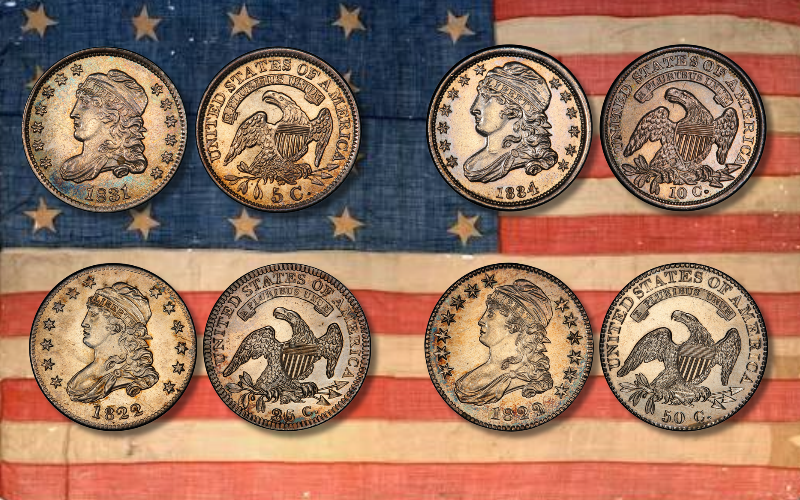
As we noted in Part 4 of this series, the Capped Bust design arrived at a pivotal moment. Designed by John Reich and appearing on the half dollar, quarter, dime, and half dime, it depicted Liberty wearing a cloth cap inscribed with the word LIBERTY, turning a symbol into a statement. The portrait is sturdier and more assertive than its predecessors, reflecting an America that had survived the War of 1812, absorbed the vast Louisiana Purchase, and was beginning to project genuine confidence onto its currency.
The Capped Bust half dollar ran the longest, from 1807 to 1839, and is the centerpiece of the series for collectors. Its variety of dates, mint marks, and design subtypes make it one of the most rewarding early American series to pursue. Understanding what makes a coin numismatic — rarity, condition, historical significance — applies particularly well here, as quality ranges from common to genuinely scarce.
Liberty Head / Coronet (1838–1908)
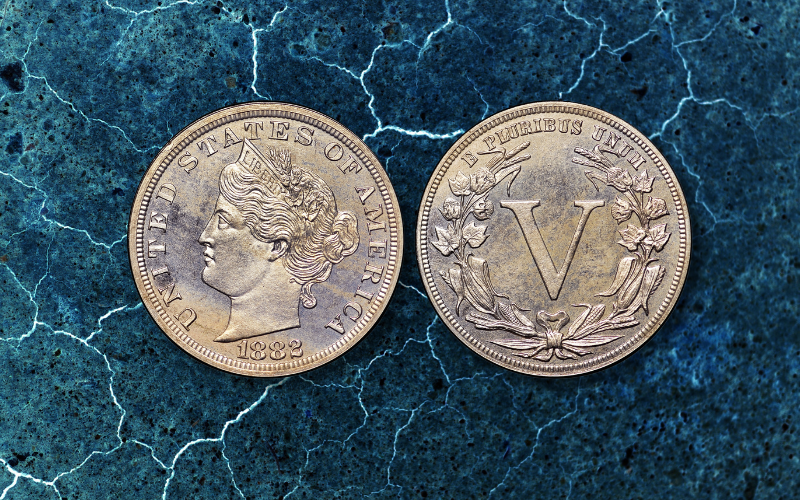
If the Capped Bust reflected a young nation finding its footing, the Liberty Head—also known as the Coronet design—accompanied America through decades of extraordinary change. Created by Christian Gobrecht for the $10 eagle in 1838 and subsequently adapted for other gold denominations, the design remained a familiar presence on American gold coinage for much of the 19th century. James B. Longacre adapted the Liberty Head motif for the $20 double eagle, first struck as a pattern in 1849 and produced for circulation beginning in 1850.
Liberty appears in composed profile, wearing a coronet inscribed with LIBERTY. The classical imagery conveyed ideals of freedom and republican government without depicting a specific political leader. During the design’s long tenure, the country experienced the California Gold Rush, the Civil War, Reconstruction, and the rapid industrial growth of the Gilded Age.
The longevity of the Liberty Head design is part of its historical significance. While the nation transformed politically and economically, versions of this familiar image continued to appear on gold coins used in everyday commerce and larger financial transactions. Double eagles, with their $20 face value, were particularly useful for high-value payments and circulated in domestic and international commerce. Today, Liberty Head gold coins offer collectors a tangible connection to an era of westward expansion, conflict, and economic growth.
Trade Dollar (1873–1885)
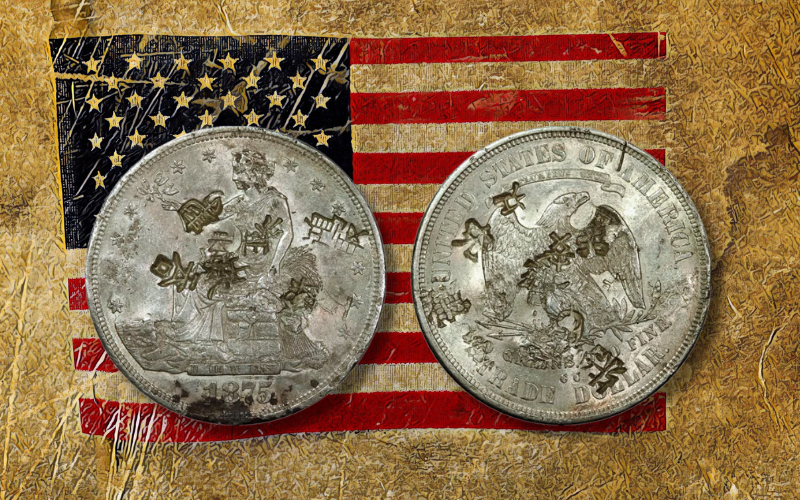
The Trade Dollar is one of the most unusual coins in American numismatic history. Authorized by the Coinage Act of 1873, it was designed to compete with the Mexican peso in Asian trade, where merchants often assessed silver coins by their weight and purity. Weighing 420 grains and struck from 90% silver, it was slightly heavier than the standard U.S. silver dollar, which weighed 412.5 grains. Its reverse prominently displayed “420 GRAINS, 900 FINE,” specifying the coin’s weight and silver fineness.
- Design: The obverse features Liberty seated by the sea, holding an olive branch and a ribbon inscribed “LIBERTY,” with a sheaf of wheat behind her. The reverse depicts an eagle holding arrows and an olive branch, with the motto E PLURIBUS UNUM above it. The design reflected the coin’s intended role in international commerce.
- Chop marks: Merchants and money changers in Asia sometimes stamped Trade Dollars with small countermarks known as chop marks to indicate that a coin had been examined and accepted. These marks provide tangible evidence of the coins’ circulation in international trade. Their effect on a coin’s desirability and value varies depending on the individual piece and collector interest.
- Legal-tender status and production: Although the Trade Dollar initially had limited legal-tender status in the United States, Congress revoked that status in 1876 as falling silver prices contributed to problems with domestic circulation. Production for circulation continued through 1878, followed by proof issues for collectors. The 1884 and 1885 examples are exceptionally rare and have a complicated production history. The Trade Dollar’s legal-tender status was later restored under federal law in 1965.
Morgan Silver Dollar (1878–1904, 1921)
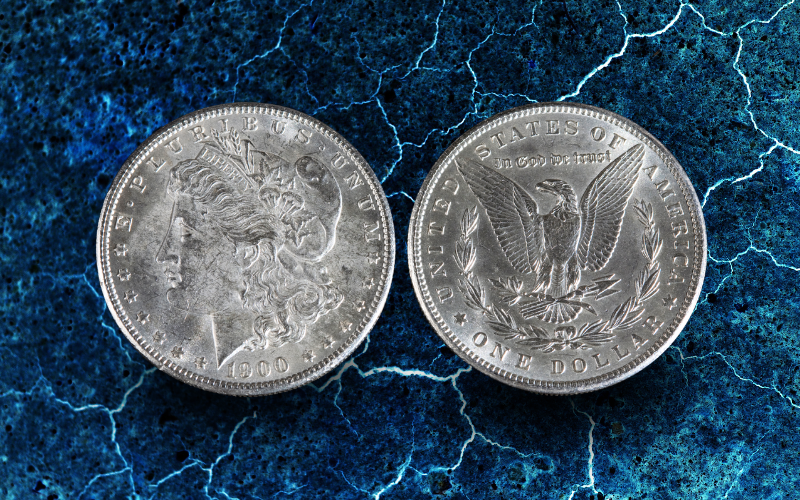
The Morgan Silver Dollar became an enduring symbol of America’s western expansion and industrial growth. First struck in 1878, it emerged during a period when silver mining and federal monetary policy were reshaping the nation’s coinage. Designed by George T. Morgan, the coin features Liberty in profile on the obverse and a powerful eagle on the reverse.
The Comstock Lode in Nevada helped fuel the era’s silver production, and the Carson City Mint was established to serve the region’s growing coinage needs. Morgan Dollars were struck at five U.S. Mint facilities over the course of the series: Philadelphia, San Francisco, Carson City, New Orleans, and Denver. Each mint’s production history adds another layer of interest for collectors, with Denver producing Morgan Dollars only in 1921.
The coins circulated during the Gilded Age, when the nation experienced rapid industrialization and economic change. Production paused after 1904 and resumed in 1921, when millions more Morgan Dollars were struck before the U.S. Mint transitioned to the Peace Dollar later that year.
Today, Morgan Dollars remain among the most collected American coins. Their appeal spans the history they represent, their distinctive design, the variety of dates and mint marks, and the challenge of finding examples in particular grades. Explore our rare coins inventory to discover Morgan Dollars and other historic U.S. coinage.
Frequently Asked Questions About 19th Century U.S. Coinage
Why was the Capped Bust design replaced after 30 years?
By the late 1830s, the U.S. Mint was updating its coin designs and production methods. Mint Director Robert M. Patterson sought a more consistent artistic approach to the nation’s silver coinage, leading to the development of the Seated Liberty design. Based on artwork by Thomas Sully and executed by Mint engraver Christian Gobrecht, the new design portrayed Liberty seated on a rock, holding a shield and a staff topped with a Liberty cap.
The transition happened gradually rather than all at once. The Seated Liberty design appeared on the half dime and dime in 1837, the quarter in 1838, and the half dollar in 1839. This shift brought a new classical style to American silver coinage and reflected the Mint’s broader effort to update the appearance and production of its coins.
What makes a chopped Trade Dollar valuable?
Trade Dollars bearing chop marks—the counterstamps applied by Asian merchants and money changers to indicate that a coin had been examined and accepted in commerce—offer a tangible connection to 19th-century international trade. These marks are especially interesting to collectors because they provide physical evidence of the coins’ circulation in Asian markets.
Chop-marked Trade Dollars appeal to a specialized collecting community, and distinctive or historically significant marks can enhance a coin’s desirability. However, chop marks do not automatically increase a coin’s value. The impact depends on factors such as the coin’s date and mint mark, overall condition, the number and character of the marks, and collector demand. Some examples command premiums, while others may be worth less than comparable coins without chop marks.
For collectors, the appeal lies in the combination of American coinage and evidence of its use in international commerce—making each genuine chop-marked Trade Dollar a distinctive artifact of the era’s global trading networks.
Are Liberty Head gold coins still accessible for collectors?
Yes. Many common-date Liberty Head gold coins remain available through coin dealers and auctions, including examples in circulated condition. Their prices reflect a combination of gold content, date, denomination, condition, and collector demand, so premiums over the value of their gold can vary.
Rarer dates, higher-grade examples, and certain coins bearing the mint marks of historic facilities such as Carson City and Charlotte can command substantial premiums. Availability and pricing vary by issue, making it worthwhile for collectors to compare examples before purchasing.
For significant purchases, consider coins certified by established third-party grading services such as PCGS or NGC. Certification can help verify authenticity and provide an independent assessment of condition, particularly for scarce or higher-value examples.
Explore 19th Century Coins at Pinehurst Coins
From the confident portrait of a Capped Bust half dollar to the frontier-era history of the Morgan Silver Dollar, 19th-century American coins offer a glimpse into a nation transforming its identity, territory, and economy. Explore our curated selection of rare and early American coins at Pinehurst Coins, and join us for Part 7 of our History Through Coins series.