

Gold. Silver. Platinum. Most collectors can speak fluently about three of the four investment-grade precious metals. The fourth, palladium, is less discussed, less understood, and, depending on the market, rarer and more valuable than all of them. It entered the coin-collecting world later than its counterparts, but its arrival was significant.
Understanding palladium, such as what it is, where it comes from, and why the U.S. Mint chose it for a coin, gives collectors a more complete picture of the precious metals landscape.
What Is Palladium?
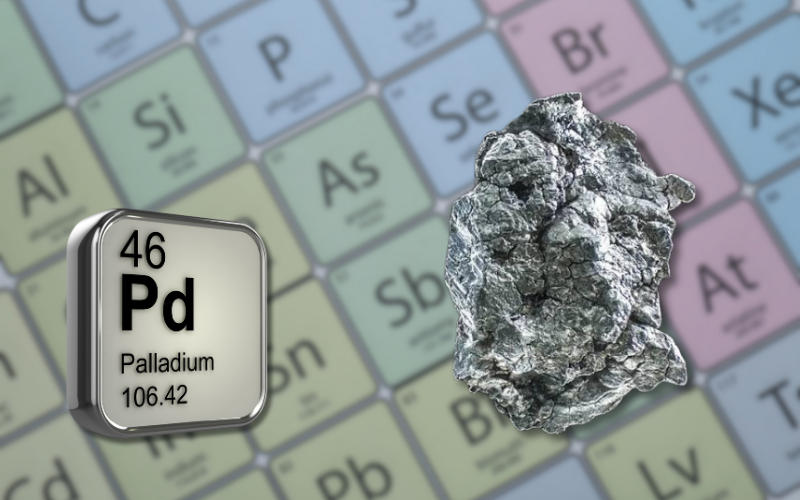
Palladium (chemical symbol Pd, atomic number 46) was discovered in 1803 by British chemist William Hyde Wollaston, who named it after the asteroid Pallas, itself named for the Greek goddess of wisdom. It belongs to the platinum group metals, a family of six chemically similar elements that also includes platinum, rhodium, ruthenium, osmium, and iridium.
- Appearance: silver-white, lustrous, and softer than platinum but harder than gold. Unlike silver, it does not tarnish at room temperature.
- Rarity: palladium is estimated to be 15 to 30 times rarer than gold. Global annual production sits at roughly 200 metric tons, a fraction of gold output.
- Source: Palladium is primarily recovered as a byproduct of nickel, platinum, copper, and other metal-mining operations. Major producing regions include Russia and South Africa, along with Canada, Zimbabwe, and the United States. Because much of its supply depends on the production of other metals, palladium availability can be influenced by mining activity and market conditions.
- Purity in coins: .9995 fine is among the highest purity standards of any U.S. Mint coin. For context on what purity certification means, see our guide on what is assay.
Why Industry Drives the Palladium Market
Unlike gold and silver, palladium’s price has historically been influenced heavily by industrial demand, particularly from the automotive sector. However, investment activity, supply constraints, geopolitical developments, and broader precious-metal market conditions also play important roles. This distinction is relevant to both collectors and investors.
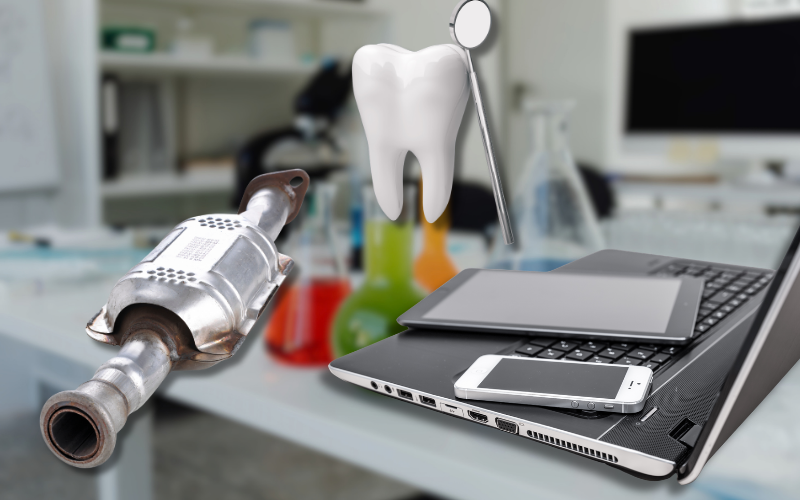
- Catalytic converters: Automotive manufacturing has historically accounted for the largest share of annual palladium demand. Palladium is widely used in catalytic converters for gasoline-powered vehicles, where it helps convert harmful exhaust gases into less harmful emissions. Changing emissions standards have influenced demand, although the growth of electric vehicles has introduced uncertainty about future automotive consumption.
- Electronics: Palladium is used in multilayer ceramic capacitors and other electronic components found in smartphones, computers, vehicles, and a wide range of modern electronic devices.
- Dentistry: Palladium alloys have been used in dental crowns, bridges, and other restorations because of their durability, corrosion resistance, and compatibility with other dental materials.
- Hydrogen purification: Palladium’s unique ability to selectively absorb and transmit hydrogen makes it useful in specialized industrial purification membranes and hydrogen-related technologies. Its properties have also made it a material of interest in emerging clean-energy applications.
This industrial dependency means palladium prices can move dramatically in response to automotive production trends, emissions regulations, and supply disruptions, dynamics that play out very differently from gold’s traditional role as a monetary safe haven.
Palladium Enters the Collecting World
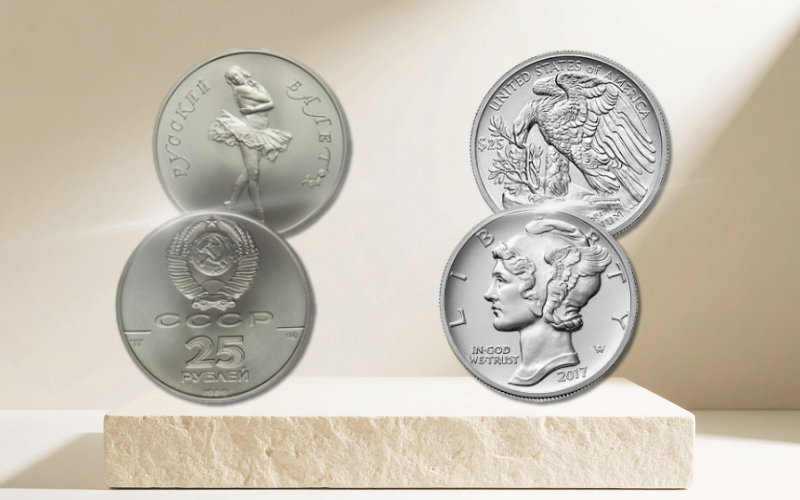
The first palladium coins appeared in 1989, when the Soviet Union issued a series featuring the Bolshoi Theatre. But the coin that brought palladium to mainstream numismatic attention was the American Palladium Eagle, authorized by Congress in 2010 and first issued by the U.S. Mint in 2017.
Metal content: one troy ounce of .9995 fine palladium, guaranteed by the U.S. government for weight and purity.
Face value: The coin carries a face value of $25, giving it legal-tender status in the United States. Its market value, however, is primarily determined by its palladium content, production costs, and collector demand.
Mint facility: struck exclusively at the West Point Mint in New York.
Design: the obverse carries Adolph Weinman’s Winged Liberty design from the 1916 Mercury Dime; the reverse features Weinman’s eagle design from the 1907 American Institute of Architects Gold Medal. Both are high-relief strikes, giving the coin a sculptural depth that distinguishes it from standard bullion issues.
2017 first-year issue: The inaugural bullion release had a maximum authorized mintage of 15,000 coins. Its limited production and introduction of a new U.S. Mint palladium bullion program generated significant interest among collectors and precious-metal buyers.
Understanding what makes a coin numismatic — the intersection of rarity, precious metal content, and collector demand — makes the Palladium Eagle a compelling study. Its mintages are dramatically smaller than gold or silver Eagles, its metal is genuinely rare, and its design heritage connects to some of the most celebrated work in American numismatic history.
Frequently Asked Questions About Palladium
Is palladium rarer than gold?
Yes. Palladium is commonly estimated to be 15 to 30 times rarer than gold when comparing annual mine production. Unlike metals typically extracted from dedicated primary deposits, palladium is primarily recovered as a byproduct of nickel, platinum, copper, and other mining operations. This dependence on other metals can limit how quickly palladium supply responds to higher prices. Global annual mine production generally amounts to only a few hundred metric tons, making palladium one of the more scarce commercially produced precious metals.
How does palladium’s price compare to gold and silver?
Palladium has historically experienced greater price volatility than gold and, at times, silver because its demand is concentrated heavily in industrial applications, particularly automotive manufacturing. In early 2022, palladium briefly traded above $3,000 per troy ounce, placing it above the price of gold during that period. Since then, its price has declined substantially from those record levels.
Unlike gold, which has a well-established role as a monetary metal and safe-haven asset, palladium has a comparatively limited investment and monetary market. As a result, changes in automotive demand, emissions regulations, mining activity, geopolitical conditions, and supply disruptions can have a pronounced effect on palladium prices.
Are American Palladium Eagles a good addition to a collection?
For collectors interested in diversifying beyond gold and silver, the American Palladium Eagle offers a compelling combination: a government-guaranteed .9995 fine metal, dramatically lower mintages than its gold and silver counterparts, a prestigious Weinman design in high relief, and exposure to a metal with genuine industrial rarity. As with any precious metal coin, buying from a reputable dealer with verified provenance is essential.
Explore Precious Metal Coins at Pinehurst Coins
Whether you’re adding your first American Palladium Eagle or rounding out a collection that already includes gold and silver, Pinehurst Coins can help. Explore our rare coins and precious metals inventory, or contact our team to discuss what’s currently available in palladium.