

Every coin tells a story. But few tell stories as rich, as sweeping, or as consequential as those minted in the ancient world. The coins of Greece and Rome, struck from roughly 600 BCE through 500 CE, weren’t just currency. They were declarations of power, celebrations of victory, portraits of gods, and windows into daily life across some of history’s greatest civilizations. This is the first installment of our ongoing series, History Through Coins, where we explore the deep connections between coinage and the world that produced it.
The Birth of Coinage: Lydia and the Greek World
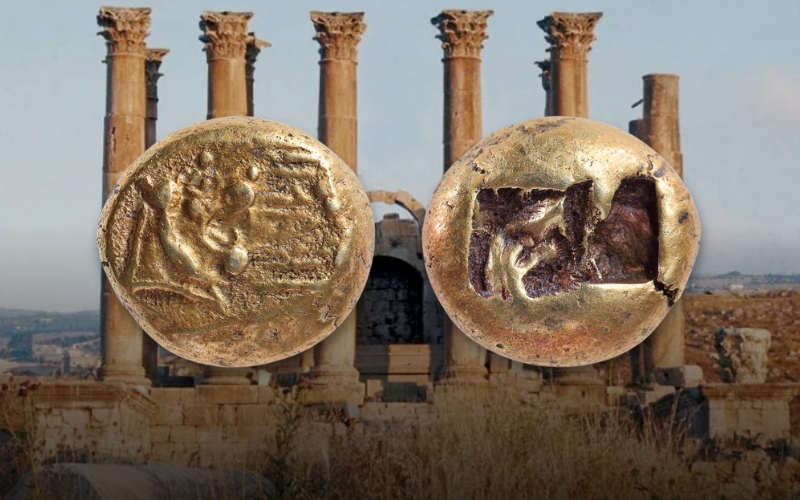
The story of Western coinage begins not in Athens or Rome, but in the ancient kingdom of Lydia in modern-day Turkey. Around 600 BCE, the Lydians began producing the world’s first standardized metal coins from electrum, a naturally occurring alloy of gold and silver. Stamped with a simple punch mark to guarantee their weight and authenticity, these early coins were a leap forward in commerce. As we explore in Ancient Coins That Changed the World, the innovation quickly spread across the Aegean, transforming trade, statecraft, and daily life across the ancient Mediterranean.
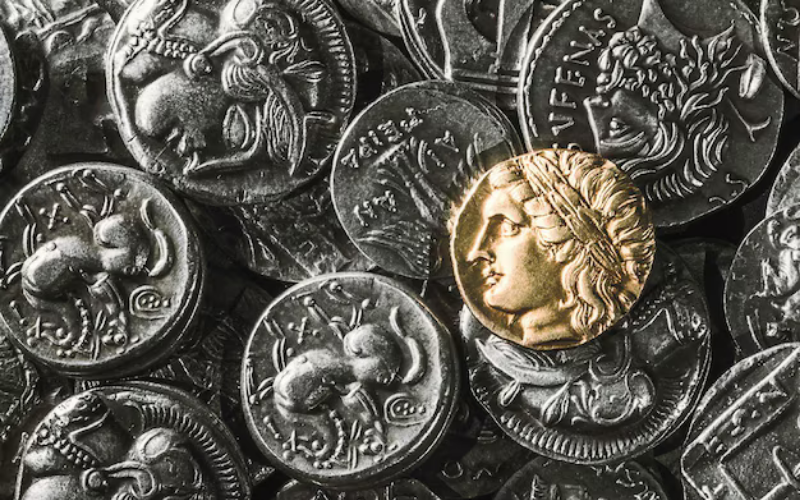
The Greeks adopted and refined the concept rapidly. By the 5th century BCE, city-states were minting their own silver coins bearing the symbols of their community. Athens produced the famous tetradrachm, a four-drachma silver coin featuring the helmeted head of Athena on the obverse and her sacred owl on the reverse. Corinth minted coins with the winged horse Pegasus. Syracuse issued some of the ancient world’s most artistically striking pieces, with detailed portraits that wouldn’t look out of place in a modern museum.For collectors today, ancient Greek coins, particularly Athenian owls and Hellenistic-era portrait coins, are among the most sought-after pieces in numismatics. Browse our Ancient & Medieval Coins collection to explore available examples.
Rome and the Rise of the Denarius
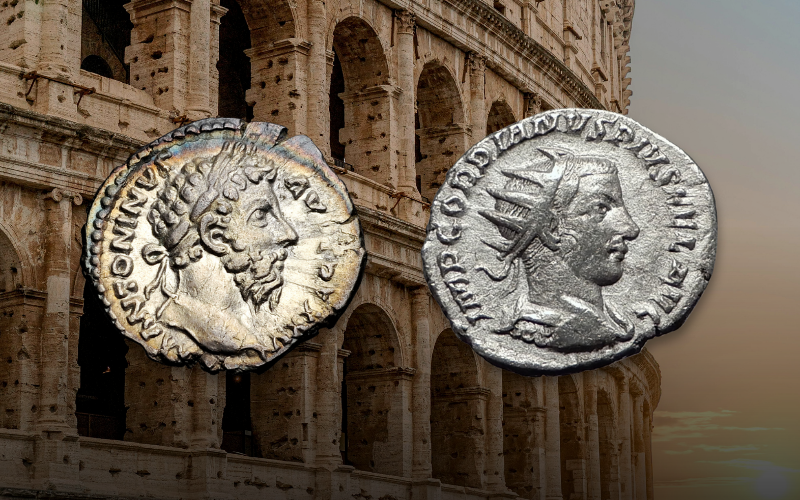
As Rome rose to dominate the Mediterranean, it built one of the most sophisticated monetary systems the ancient world had ever seen. The Roman denarius, a silver coin introduced around 211 BCE, became the backbone of Roman commerce for centuries, with a reach stretching from Britain to the borders of Persia.
What set Roman coins apart wasn’t just their function. It was their role as tools of propaganda. Emperors used coinage to broadcast their likeness and legitimacy to every corner of the empire. Julius Caesar was among the first Roman leaders to appear on a coin during his lifetime, a bold political statement that subsequent emperors eagerly followed. Coins commemorated military victories, the construction of monuments, and the divine status of rulers. If you wanted to know what the emperor looked like or what he wanted his subjects to believe about his reign, the coins in your pocket would tell you.
For collectors, Roman coins offer remarkable accessibility alongside extraordinary depth. Common bronze coins can be found at modest price points, while rare silver denarii featuring short-reigning emperors or unusual reverse types can command significant premiums, and some of the rarest ancient pieces have reached legendary auction prices. To understand what drives that kind of value, see our guide on the most valuable coins ever sold.
What to Know When Collecting Ancient Coins
Ancient coins occupy a unique place in numismatics. Unlike U.S. coins, they are typically not graded using the standard Sheldon numeric scale alone, though professional services like NGC do authenticate and grade ancient coins using descriptive grades along with strike and surface ratings. Collectors evaluate ancient coins on several overlapping factors.
Strike and Surface Quality
Ancient coins were hand-struck, meaning no two are identical. A well-centered, sharp strike with clear detail is considerably more desirable than a weak or off-center example. One of the skills numismatists develop over time is dating ancient coins by reading strike characteristics, iconography, and inscriptions alongside historical context.
Patina
The natural toning that develops over centuries is called patina, and a stable, attractive patina can be an indicator of age and originality. Harsh cleaning, which removes patina, is widely considered damaging and reduces collector value.
Provenance and Legality
Because ancient coins originate from countries with strict cultural heritage laws, including Greece, Italy, and Turkey, buyers should always purchase from reputable dealers who provide documented provenance and guarantee legal acquisition.
Rarity and Type
Common Roman bronze coins can be affordable entry points, while rare denominations, unusual portrait types, or coins from short-lived emperors can be substantially more valuable. Understanding what makes a coin numismatic, the combination of rarity, grade, and historical significance, is the foundation of smart collecting. Learn more in our guide to what makes a coin numismatic.
Explore Ancient Coins at Pinehurst Coins
Ancient Greek and Roman coins are more than relics; they’re tangible pieces of the civilizations that shaped the modern world. Whether you’re a seasoned collector drawn to the artistry of Athenian silver or a newcomer curious about your first Roman bronze, Pinehurst Coins can help you find the right piece for your collection. Browse our Ancient & Medieval Coins inventory, or explore our full rare coins selection to see what’s currently available.
This is just the beginning of our History Through Coins series — stay tuned for future installments exploring medieval coinage, the Age of Exploration, and beyond.
Frequently Asked Questions About Ancient Greek and Roman Coins
Are ancient Greek and Roman coins legal to own?
Yes, in the United States, it is legal to own ancient coins provided they were legally acquired and documented. Coins that can demonstrate export documentation and a legal chain of ownership before any relevant cultural property agreements are generally permissible. Always buy from a reputable dealer who stands behind the provenance of their inventory.
How do I know if an ancient coin is authentic?
Authentication is one of the most important considerations in ancient coin collecting. Purchasing from established dealers who guarantee authenticity is the safest first step. For higher-value pieces, certification through a service like NGC Ancients provides an independent assessment of authenticity and condition.
What is a good entry-level ancient coin for a new collector?
Common Roman bronze coins, such as the Roman folles and late Roman bronzes from the 3rd and 4th centuries CE, are widely available and often affordable. They offer a genuine connection to antiquity without the premium attached to rarer pieces. Browse our inventory of rare and ancient coins to find current options across a range of budgets.