

The fall of Rome did not end the story of coinage. It transformed it. Across roughly a thousand years of medieval history, coins reflected the dramatic shifts in power, faith, and commerce that shaped the world we inherited. From the enduring gold solidus of the Byzantine Empire to the revolutionary florin of Renaissance Florence, the coins of the medieval period are among the most fascinating and historically layered pieces in numismatics. This is the second installment of our History Through Coins series, where we explore the deep connections between coinage and the civilizations that minted it.
The Byzantine Solidus: Rome’s Golden Heir
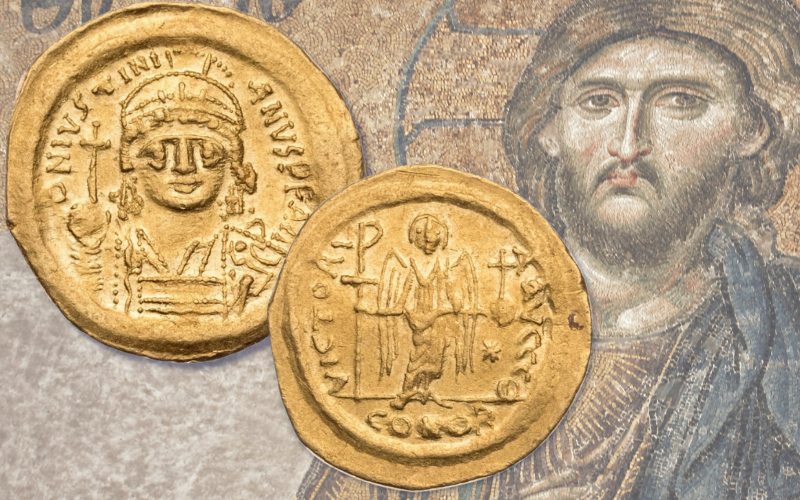
When the Western Roman Empire collapsed in 476 CE, its eastern half lived on for nearly another thousand years as the Byzantine Empire. And with it survived one of antiquity’s most durable monetary achievements: the gold solidus.
Introduced during the reign of Emperor Constantine I in the early 4th century CE (circa 312–324 CE), the solidus became one of the most important gold coins of the medieval world. Struck at a consistent weight of approximately 4.5 grams of pure gold, it served as an international reserve currency across Europe, the Middle East, and Central Asia for over seven centuries. Traders from Scandinavia to Persia recognized and accepted it. The term “soldier” is sometimes linked to the solidus through its role in military payment, reflecting the coin’s importance in imperial logistics.
For collectors, Byzantine coins offer extraordinary visual appeal alongside genuine historical depth. Obverse portraits of emperors in full regalia and reverse images of Christ, the Virgin Mary, or the cross mark a distinct artistic tradition that blends Roman imperial style with Christian iconography. Well-preserved examples with strong strikes and original luster are especially desirable.
German Pfennigs and the World of Feudal Silver
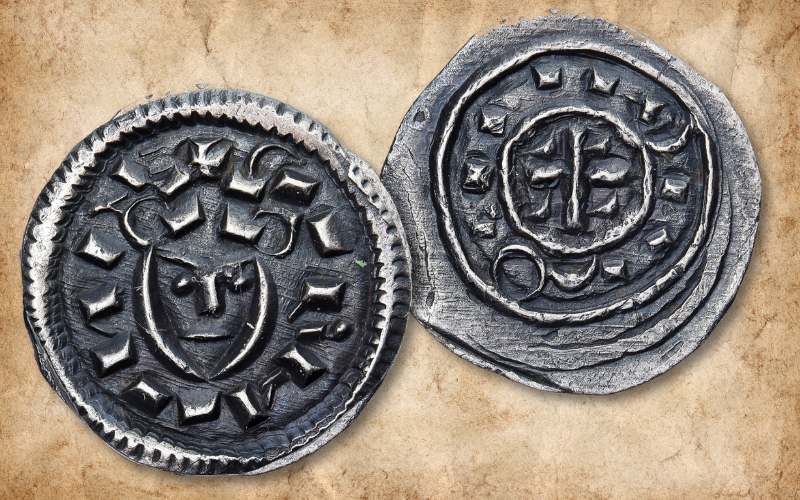
While Byzantium maintained a gold standard in the East, Western Europe largely saw a decline in the circulation of gold coinage for several centuries after Rome’s collapse. In its place, a patchwork of silver-based monetary systems emerged, shaped by the fragmented political reality of feudal society.
The German Pfennig (also called the Denar or Denarius in the broader European tradition) became a key small-denomination coin in Central European commerce. Minted by local lords, bishops, abbots, and city-states rather than by a central authority, Pfennigs varied enormously in design and quality. Bracteates, a thin single-sided variation popular in the 12th and 13th centuries, are among the most visually striking examples, often featuring intricate designs of rulers, animals, and religious figures pressed into fragile silver foil.
This decentralized minting environment makes medieval silver coins a particularly rewarding area for research-minded collectors. Understanding what makes a coin numismatic is especially relevant here, since rarity, provenance, and regional significance all play a central role in establishing the value of feudal-era pieces.
Crusader Coinage: Faith, War, and Commerce
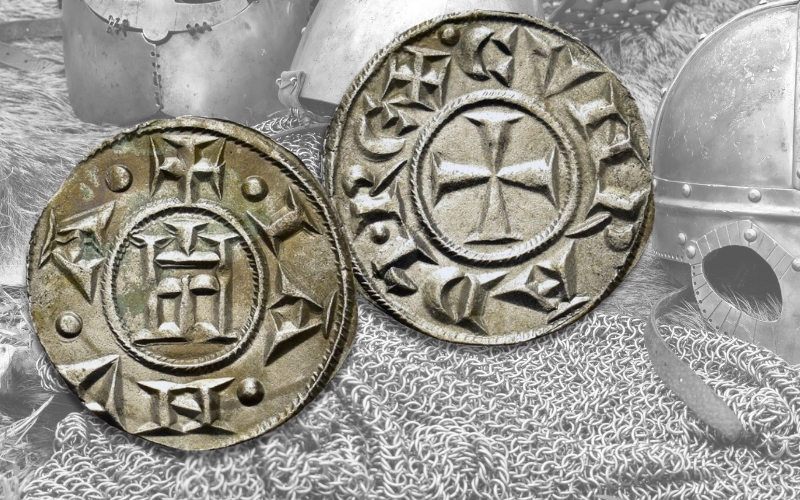
The Crusades (1095–1291 CE) created a remarkable numismatic phenomenon. As Christian armies established and governed states across the Holy Land, Cyprus, and Greece, they needed functioning monetary systems. The result was Crusader coinage: a fascinating hybrid tradition that blended Western European minting conventions with Byzantine and Islamic influences.
The Latin Kingdom of Jerusalem issued coins that sometimes featured crosses alongside Arabic-style or pseudo-Arabic inscriptions, a pragmatic acknowledgment that they needed to circulate among a diverse, multilingual population. The County of Tripoli, the Principality of Antioch, and other Crusader states each developed their own coinage traditions, producing a rich variety of types across a relatively short window of history.
Crusader coins are among the more historically significant and sought-after medieval issues a collector can acquire. Because so few survive in high grades, even circulated examples carry significant historical weight. For a broader sense of the spectrum of what ancient and medieval pieces can fetch, our guide to the most valuable coins ever sold provides useful context.
The Florentine Florin: The Coin That Financed the Renaissance
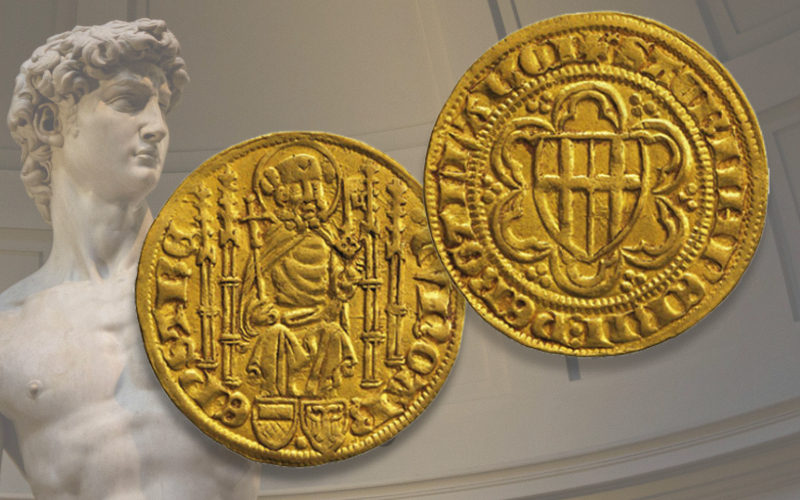
By the 13th century, expanding trade networks across the Mediterranean were straining the limits of silver-based economies. The answer came from Florence, Italy, in 1252: the florin.
Struck from high-purity gold and bearing the city’s heraldic lily on one side and the image of St. John the Baptist on the other, the florin quickly became one of the dominant international trade coins of the late medieval world. Merchants from England to the Levant frequently used florins in international trade and accounting. The great banking families of Florence, including the Medici, built the financial infrastructure of the early Renaissance on florin-denominated accounts. The coin’s influence was so broad that the Hungarian forint derives its name from the florin, reflecting its enduring impact on European currency systems.
For collectors, the florin represents a bridge between the medieval and modern worlds. Its standardized weight and purity, combined with beautiful, consistent design, make it one of the most recognizable and sought-after medieval gold coins available today. Browse our Ancient & Medieval Coins collection to explore currently available examples.
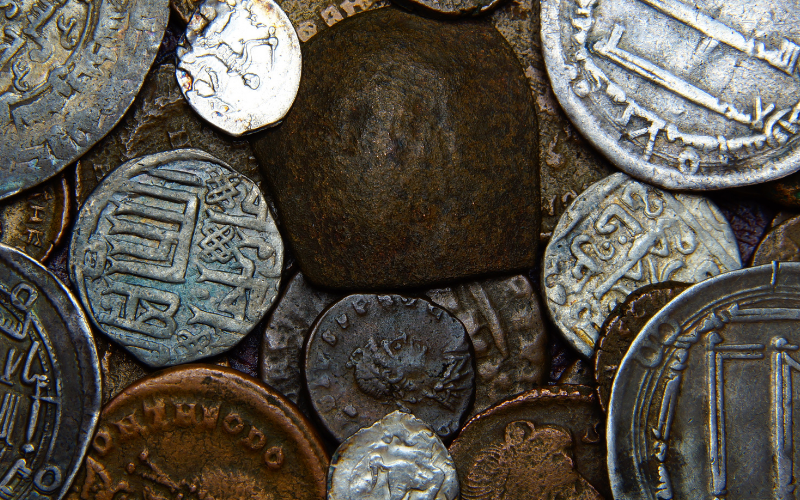
Collecting Medieval Coins: What to Know
Medieval coins present unique opportunities and unique challenges compared to ancient or modern issues. Here are the most important considerations for new and experienced collectors alike.
Authentication and provenance.
As with ancient coins, purchasing from a reputable dealer who guarantees authenticity is essential. Certification through services like NGC can provide independent grading and authentication for many higher-value medieval coins. When available, documented provenance can add confidence and historical value. To understand the basics of evaluating an unfamiliar coin, see our guide on dating ancient coins, which covers many skills directly applicable to medieval pieces.
Grade and condition.
Medieval coins were hand-struck on irregular planchets, meaning even well-preserved examples can show off-center strikes or weak areas. A sharp, well-centered strike with clearly readable inscriptions and strong design detail commands a significant premium over weak or damaged examples. Patina and surface preservation also matter, though evaluation standards can differ somewhat depending on metal type and issuing region.
Type and historical significance.
The medieval period spans a thousand years across dozens of kingdoms, empires, and city-states, which means the range of available material is extraordinary. Collectors can focus narrowly (Byzantine gold, Crusader bronzes, Gothic bracteates) or build thematic collections that tell a broader story. Rarity within a type, the reigning authority, and documented historical context all affect value.
Entry points for new collectors.
Common Byzantine bronze coins and late medieval silver pieces from larger mints can be affordable starting points. They offer genuine connections to medieval history without the premium attached to gold florins or Crusader rarities. Browse our full rare coins inventory for options across a range of budgets.
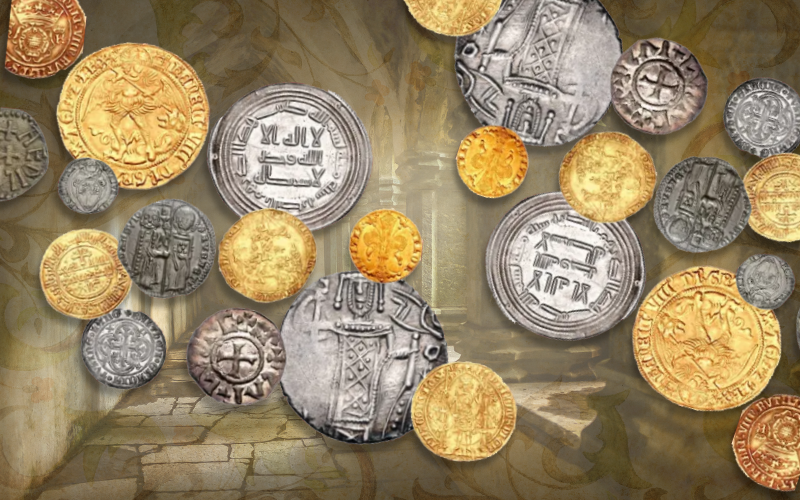
Frequently Asked Questions About Medieval Coins
How old do coins have to be to be considered medieval?
The medieval period is generally defined as running from roughly 500 CE, following the fall of the Western Roman Empire, to approximately 1500 CE, around the beginning of the Renaissance and the Age of Exploration. Coins minted during this window, whether Byzantine solidi, feudal Pfennigs, Crusader issues, or Florentine florins, are considered medieval.
Are medieval coins legal to own in the United States?
Yes. In the United States, owning medieval coins is legal, provided they were legally imported and acquired through legitimate channels. There are no general restrictions on private ownership of medieval European coinage. As with all numismatic material, purchasing from a reputable dealer is strongly recommended, and documented provenance can add confidence and long-term value, particularly for higher-end or historically significant pieces.
How do I authenticate a medieval coin?
One of the safest approaches is to purchase from an established dealer who guarantees authenticity. For higher-value pieces, independent certification through a service such as NGC provides a professional assessment of both authenticity and condition. Developing familiarity with the standard types, weights, and designs of specific coinage traditions also helps collectors identify questionable pieces over time.
What is a good entry-level medieval coin for a new collector?
Common Byzantine bronze coins, such as folles from the 6th through 11th centuries of the Byzantine Empire, are widely available and often affordable for new collectors. Late medieval silver coins from major European mints are another good starting point. Both types offer genuine historical connections and a wide range of available grades and price points.
How do medieval coins differ from ancient coins in terms of collecting?
The collecting frameworks are similar in many ways, with both categories involving hand-struck coins evaluated on strike quality, surface preservation, and historical significance. Medieval coins differ in that they span a more diverse range of minting authorities, artistic traditions, and monetary systems. Grading conventions can vary more widely across medieval series, and the available reference literature is sometimes less comprehensive for obscure medieval types than for well-documented ancient series.
Explore Medieval Coins at Pinehurst Coins
Medieval coins are more than artifacts. They are primary sources: tangible records of the rulers, faiths, and economies that shaped the world between antiquity and modernity. Whether you are drawn to the gleam of Byzantine gold, the crusading symbolism of a Jerusalem cross, or the commercial sophistication of a Florentine florin, Pinehurst Coins can help you find the right piece for your collection. Browse our Ancient & Medieval Coins inventory, or explore our full rare coins selection to see what is currently available.