

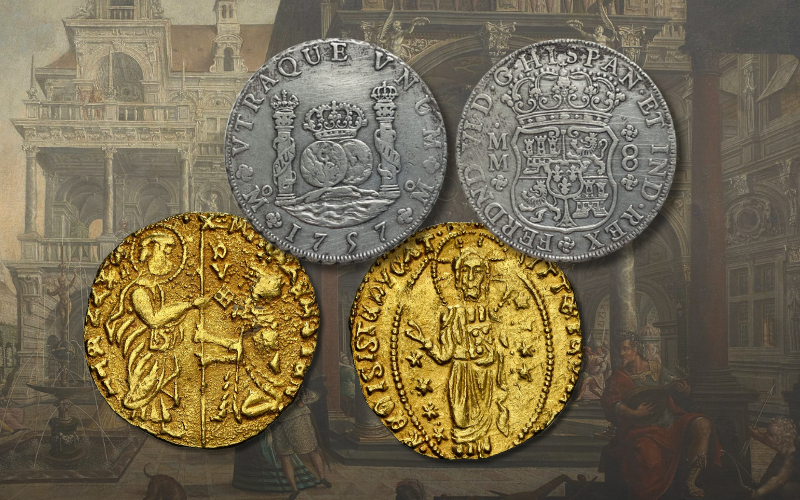
In the first two installments of our History Through Coins series, we traced the origins of Western coinage in the ancient world, from Lydia’s first electrum coins to the Greek tetradrachm and the Roman denarius. Those ancient currencies built the template. But it was during the Renaissance — roughly 1400 to 1600 CE — that coinage became something the ancient world never fully achieved: a genuinely global medium of exchange. Two coins defined this transformation more than any others. The Venetian Ducat and the Spanish Real didn’t just facilitate trade across Renaissance Europe. They connected continents, financed empires, and laid the monetary foundations that the modern world still builds on today.
Trade Calls for a Common Currency
By the early Renaissance, European commerce was expanding at a pace that fragmented medieval coinage couldn’t sustain. Merchants moving goods from Venice to Alexandria, or from Seville to the Baltic ports, needed currencies they could trust without weighing every coin at every border. The problem wasn’t just inconvenience; it was risk. Coins of unknown purity, inconsistent weight, and dubious origin were a constant threat to any merchant who accepted them in good faith.
While governments minted the coins, it was merchants who determined which ones became trusted international standards. The coins that earned reputations for consistent purity and weight became the default choice of merchants everywhere. Two of them rose above all others: one struck in gold by the Republic of Venice, the other in silver by the Spanish monarchy. Together, they are among the most influential steps toward international monetary standardization between the fall of Rome and the modern financial era.
The Venetian Ducat: Gold Standard of the Renaissance
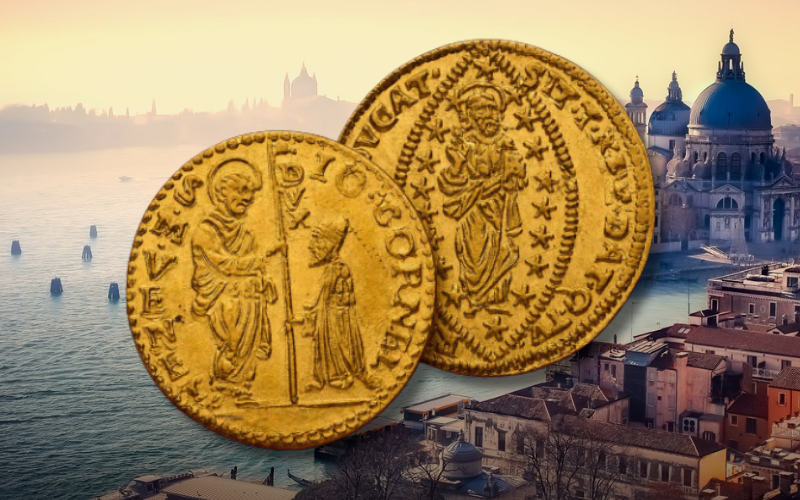
First struck in 1284, the Venetian ducat, also known as the zecchino, became the Mediterranean’s most trusted currency by the 15th century, built entirely on one thing: unwavering consistency.
- 3.5 grams at 99.47% purity — among the finest gold coins medieval metallurgy could produce.
- 500-year design — the Doge kneeling before Saint Mark on the obverse, Christ in a mandorla on the reverse, unchanged until Napoleon dissolved the Republic in 1797.
- Outlasted the florin — while the Florentine rival lost credibility through debasement and imitation, Venice never wavered.
- Origin of “sequin” — ducats sewn onto women’s headdresses across the Mediterranean led French speakers to adapt zecchino into the modern word.
- Venetian history — Each ducat bears the name of the reigning Doge, making the series a fascinating way to trace centuries of Venetian history.
Browse our ancient and medieval coins to explore what’s currently available.
The Spanish Real: Silver That Circled the Globe
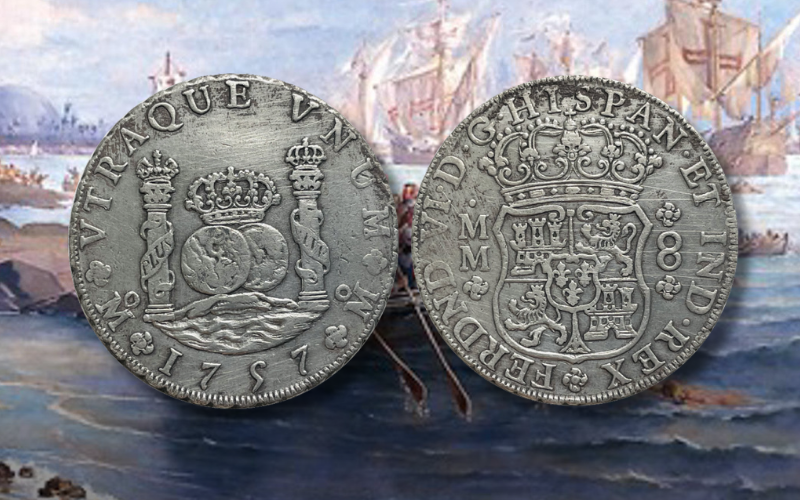
When Ferdinand and Isabella’s 1497 Ordinance of Medina del Campo standardized Spanish silver coinage, it laid the foundation for what would become the first truly global monetary system. Its largest denomination, the 8 reales, or “piece of eight,” did what no coin had done before: it circled the world.
- 27.4 grams of high-purity silver made one of the most trusted large denominations in Western commerce.
- New World mines at Potosí and Mexico City flooded global markets with Spanish silver, pushing the real onto four continents.
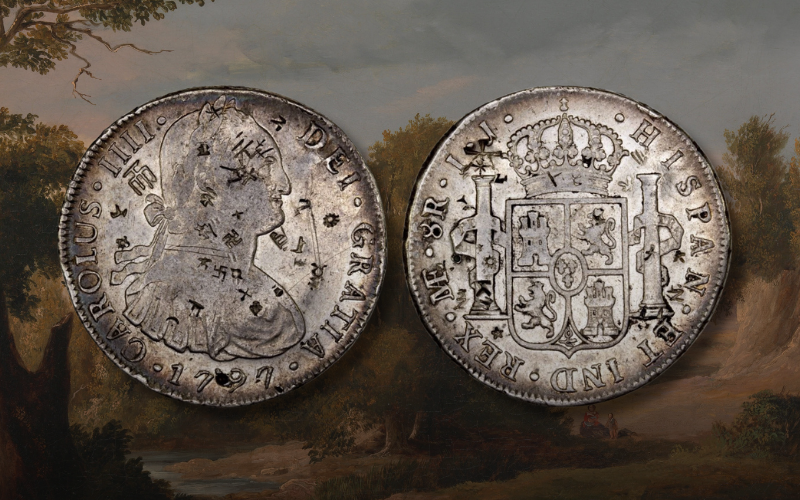
- Chop marks are stamps applied by Chinese merchants to verify purity and are found on reals that traveled the Pacific trade routes.
- “Two bits” (still used as slang for a quarter) refers to two reales, which colonists cut from a piece of eight for smaller transactions.
- The U.S. dollar was modeled in large part on the Spanish dollar, which circulated widely in colonial America and remained legal tender in the United States until 1857.
As we discuss in our series on ancient coinage that influenced modern U.S. coins, the numismatic DNA of American currency runs far deeper than most collectors realize.
What Renaissance Coins Mean for Collectors
Renaissance-era coins offer collectors something genuinely rare in numismatics: the combination of authentic historical weight, remarkable variety, and a range of accessibility that spans from entry-level pieces to museum-quality rarities. Understanding what makes a coin numismatic is especially relevant here.
- Venetian ducats vary significantly in value depending on the doge depicted, the strike quality, and the surface preservation. Because the design remained consistent for centuries, the key differentiator for collectors is the specific doge attribution and the coin’s overall eye appeal.
- Spanish 8 reales generally fall in two broad categories: crude, hand-struck “cob” coins (macuquinas) produced before 1732, and the later machine-struck milled coins with more regular surfaces and designs. Cobs are prized for their raw historical character and their connection to the age of sail and exploration; milled pieces tend to be more accessible for condition-focused collectors.
- Chop-marked pieces Spanish reals bearing verification stamps from Asian merchants are a distinct collecting specialty, offering a tangible record of global trade across the Pacific in a single coin.
Frequently Asked Questions About Renaissance Coinage
What was the Venetian Ducat, and why was it so trusted?
The Venetian ducat was a gold coin struck by the Republic of Venice from 1284 to 1797. Weighing approximately 3.5 grams and struck in nearly pure gold (about 99.47% fineness), it maintained remarkably consistent weight and purity for more than five centuries. That unwavering consistency earned the trust of merchants throughout the Mediterranean and beyond, making the ducat one of the Renaissance’s most widely accepted international trade coins.
What is a “piece of eight” and how does it connect to U.S. currency?
The piece of eight was the 8 reales denomination of the Spanish real, a large silver coin that became the world’s leading international trade currency from the 16th through the early 19th centuries. It circulated widely in colonial America and heavily influenced the creation of the U.S. dollar. The expression “two bits”—still used as slang for a quarter—comes from the practice of cutting a piece of eight into eight smaller segments, with two bits representing one-quarter of the coin.
What are cob coins, and are they worth collecting?
Cob coins (macuquinas) are hand-struck Spanish colonial coins produced primarily before the introduction of machine-struck coinage in 1732. Because they were individually cut from silver bars and struck by hand, their irregular shapes, off-center designs, and distinctive surfaces make virtually every example unique. Many collectors value cob coins for their strong connection to the Age of Exploration, Spanish colonial history, and the global trade routes of the 16th through 18th centuries.
Is the Venetian Ducat related to the modern word “sequin”?
Yes. The modern English word “sequin” ultimately derives from the Venetian gold coin known as the zecchino. Through French (sequin), the name came to refer to the valuable gold coins themselves and later to the small, shiny ornaments inspired by coins that were sewn onto clothing and accessories. Today, “sequin” refers to any small reflective decorative disc.
Explore Renaissance and World Coins at Pinehurst Coins
The Venetian ducat and the Spanish real are more than historic coins—they helped shape the first global trading economy, connecting merchants, empires, and continents through centuries of international commerce. Their influence can still be seen today, from the enduring importance of trusted coinage to the monetary traditions that inspired modern currencies.
Whether you’re drawn to the remarkable consistency of Venetian gold or the fascinating history of Spanish silver, Pinehurst Coins offers a curated selection of ancient, medieval, and world coins for collectors of every experience level. Explore our ancient and medieval coins collection, or browse our full rare coins inventory to discover your next piece of history.