

Platinum is one of the world’s most valued precious metals, prized for its rarity, resistance to corrosion, and importance in modern industry. Yet its adoption as a coinage metal came much later than that of gold and silver. Indigenous metalworkers in South America worked platinum centuries before European scientists began studying it, but the metal’s exceptionally high melting point made it difficult to refine and shape using traditional methods. Over time, advances in metallurgy opened the door to platinum coinage. This guide explores that journey, from platinum’s early history and scientific recognition to the modern bullion coins prized by collectors today.
The Discovery of Platinum
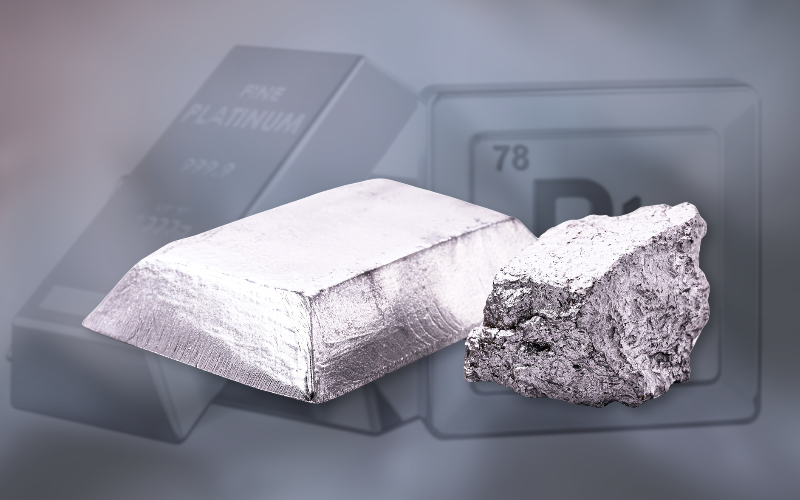
Long before European scientists studied platinum, Indigenous metalworkers in present-day Ecuador and Colombia incorporated the metal into gold ornaments. Because platinum has an exceptionally high melting point, they developed techniques such as sintering, using heat to bond small platinum grains with gold. This allowed them to create distinctive gold-platinum objects centuries before platinum could be readily melted and worked using conventional methods.
Spanish colonists encountered platinum during gold mining in South America in the 16th century. They called it platina, meaning “little silver,” and often regarded it as an unwanted impurity that complicated gold processing. In 1748, Spanish naval officer and scientist Antonio de Ulloa published an account describing the unusual metal, helping introduce it to European scientific circles. Samples subsequently reached researchers across Europe, who began investigating platinum’s unusual properties. By the late 18th century, scientists increasingly recognized platinum as a distinct metal with significant potential, although the technical challenges of refining and working it remained substantial.
Platinum’s First Coins: Russia Leads the Way
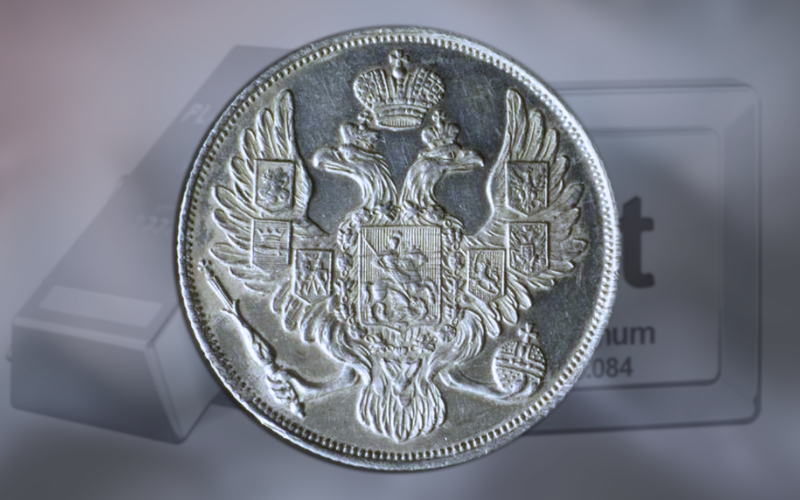
Platinum entered the history of circulating coinage in the Russian Empire. After significant deposits were discovered in the Ural Mountains during the early 19th century, Russia began exploring ways to use the metal. In 1828, under Czar (Emperor) Nicholas I, the country introduced platinum coins in denominations of 3 rubles, followed by 6- and 12-ruble coins in subsequent years. Russia became the first nation to issue platinum coins for regular circulation.
The program ended in 1845, after just 17 years. Platinum’s market value had declined, raising concerns about the relationship between the coins’ face value and the value of their metal content. The coins were also unfamiliar to many people, and producing them was costly. The government ordered their withdrawal from circulation, and many were returned and melted down.
Today, surviving Russian platinum rubles are historically significant collectibles, sought after by specialists in Russian and world numismatics. Their rarity varies by denomination, date, and surviving population, with some examples exceptionally scarce. These pioneering coins mark an important chapter in the history of platinum and its eventual adoption in modern bullion coinage.
The Rise of Modern Platinum Bullion Coins
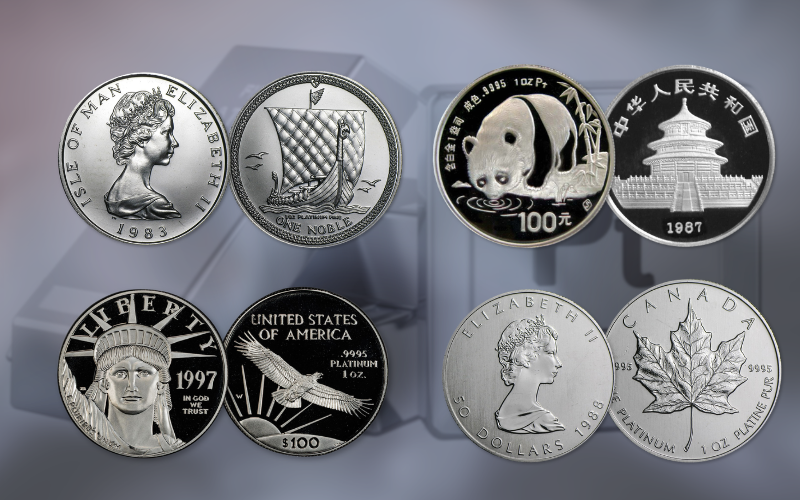
After Russia’s platinum coinage program ended in 1845, platinum remained largely absent from circulating coinage for more than a century. Its modern bullion era began in 1983, when the Isle of Man introduced the Platinum Noble, widely recognized as the first modern platinum bullion investment coin. The release marked a new chapter in platinum coinage, offering collectors and precious metals buyers a coin specifically intended for the investment market.
Other countries soon introduced their own platinum coin programs. China launched its Platinum Panda in 1987, followed by the Royal Canadian Mint’s Platinum Maple Leaf and the Perth Mint’s Australian Platinum Koala in 1988. These releases expanded the range of platinum coins available to collectors and bullion buyers, each offering distinctive designs and specifications.
In 1997, the United States Mint introduced the American Platinum Eagle, the country’s official platinum bullion coin. Struck in one-troy-ounce and, during certain years, fractional sizes, the coin carries a $100 face value for the one-ounce denomination. Bullion versions feature the Statue of Liberty on the obverse and a soaring eagle on the reverse. Proof versions, produced at the West Point Mint and bearing the “W” mint mark, offer a separate collecting experience through designs organized around themes of American history and ideals. Since 2018, the proof program has used a common reverse design within each multi-year series while changing the obverse artwork.
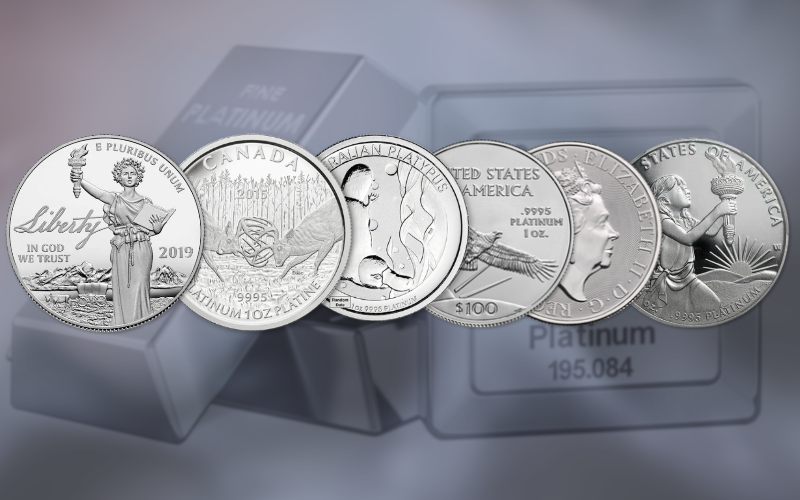
Today, platinum coins have been issued by mints in several countries, including the United States, Canada, Australia, China, and the United Kingdom. Although the selection is smaller than that of gold or silver bullion coins, platinum issues offer collectors a distinctive combination of precious-metal content, national symbolism, and specialized numismatic history.
Platinum Properties That Make It Unique
Platinum’s physical characteristics help explain its value as both a precious metal and an industrial material. These properties also influence the appearance, dimensions, and long-term preservation of platinum coins.
Rarity: Platinum is rarer than gold in terms of natural abundance and annual mine production. Global mine supply is concentrated in a few countries, particularly South Africa, with Russia also serving as a major producer. This geographic concentration makes platinum supply sensitive to regional mining and economic conditions.
Density: Platinum is one of the densest naturally occurring elements, with a density of approximately 21.45 grams per cubic centimeter. Because it is denser than gold and silver, a platinum coin of the same weight and comparable shape can be smaller than a silver coin.
Corrosion Resistance: Platinum is highly resistant to corrosion and tarnishing under ordinary conditions. This durability helps it retain its metallic appearance over time, although platinum coins can still develop scratches, surface marks, and deposits from handling or storage.
High Melting Point: Platinum melts at approximately 3,215°F (1,768°C), considerably higher than gold or silver. This property made platinum difficult to refine and shape using traditional metalworking techniques, delaying its widespread adoption in coinage.
Purity: Many modern platinum bullion coins are struck in .9995 fine platinum, meaning they contain 99.95% platinum by weight. However, purity standards vary by coin and issuing mint, so buyers should check each coin’s specifications to confirm its precious-metal content.
What Is Platinum Used For?
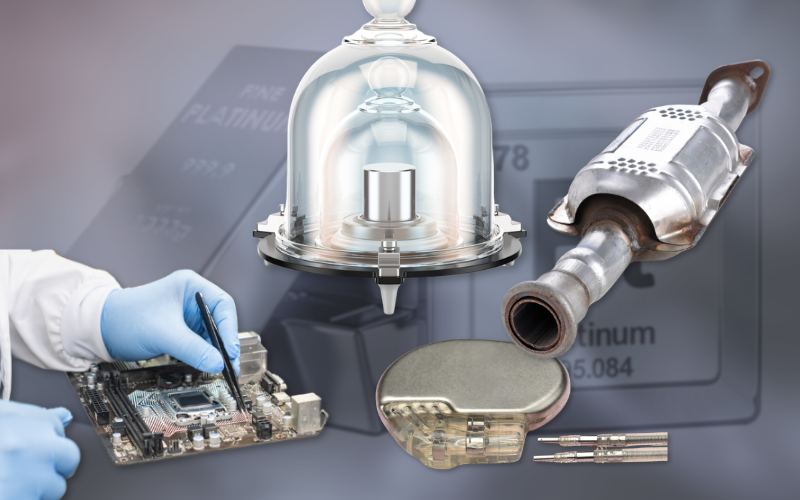
Platinum has a wide range of applications beyond coins and jewelry, thanks to its catalytic properties, resistance to corrosion, and reliable performance at high temperatures. These characteristics make it valuable across several major industries.
The automotive industry is a major consumer of platinum. The metal is used in catalytic converters, where it helps reduce harmful emissions from vehicle exhaust. Platinum catalysts are also important in petroleum refining and chemical manufacturing, including processes used to produce high-octane fuels and nitric acid, a key ingredient in many fertilizers.
In medicine and healthcare, platinum is used in certain medical devices and implants, including components for pacemakers and other specialized equipment. Platinum-containing compounds are also used in some cancer treatments, although these medicines rely on the chemical properties of the compounds rather than metallic platinum alone.
Electronics and advanced technology provide further applications. Platinum is used in electrical contacts, sensors, computer hard drives, and other electronic components. It also serves as a catalyst in hydrogen fuel cells, which generate electricity through electrochemical reactions.
Platinum has even played a role in scientific measurement. For more than a century, the International Prototype Kilogram—a cylinder made from a platinum-iridium alloy—served as the international reference for mass. In 2019, the kilogram was redefined using a fundamental constant of nature rather than a physical object.
This broad range of industrial uses distinguishes platinum from gold and silver. Its market is influenced not only by investment and jewelry demand, but also by manufacturing activity, technological developments, and demand for industrial catalysts.
The Significance of Platinum in Coin Collecting
Platinum occupies a distinctive place in numismatics. Its relatively short history as a coinage metal, unique physical properties, and the sometimes-limited mintages of individual issues make platinum coins an interesting area for collectors to explore. Government-issued bullion coins, historic Russian platinum rubles, and proof editions each offer different perspectives on the metal’s history and appeal.
Certified examples graded by established services such as NGC or PCGS can provide added confidence in a coin’s authenticity and condition. Coins receiving high grades may attract additional collector interest, although premiums vary depending on the issue, mintage, condition, and market demand.
For collectors who already enjoy gold and silver coins, platinum offers another metal to explore, with its own designs, issuing mints, and history. Whether the goal is to build a collection around modern bullion issues or pursue historically significant examples, platinum coins provide a distinctive addition to the wider world of numismatics.
Explore Platinum Coins at Pinehurst Coins
From Indigenous metalworkers in South America to the modern American Platinum Eagle, the history of platinum coinage reflects centuries of discovery, experimentation, and innovation. Once dismissed by Spanish colonists as platina, or “little silver,” platinum is now valued for its rarity, distinctive properties, and role in modern coinage.
Pinehurst Coins offers a selection of platinum coins for collectors to explore, including certified American Platinum Eagles, Chinese Platinum Pandas, and other modern issues when available. Whether you’re interested in contemporary bullion designs or the history of platinum coinage, discover our selection and find pieces that interest you.